The telescope that found it was called Big Ear, and it worked in a way no other radio telescope has before or since. Built at the Ohio State University Radio Observatory in Delaware, Ohio, it was not a dish that rotated to follow the sky. It was a fixed array of flat and parabolic reflectors, anchored to the ground, relying on Earth's own rotation to scan the heavens. Every point in the sky passed through its beam for exactly 72 seconds as the planet turned beneath it.
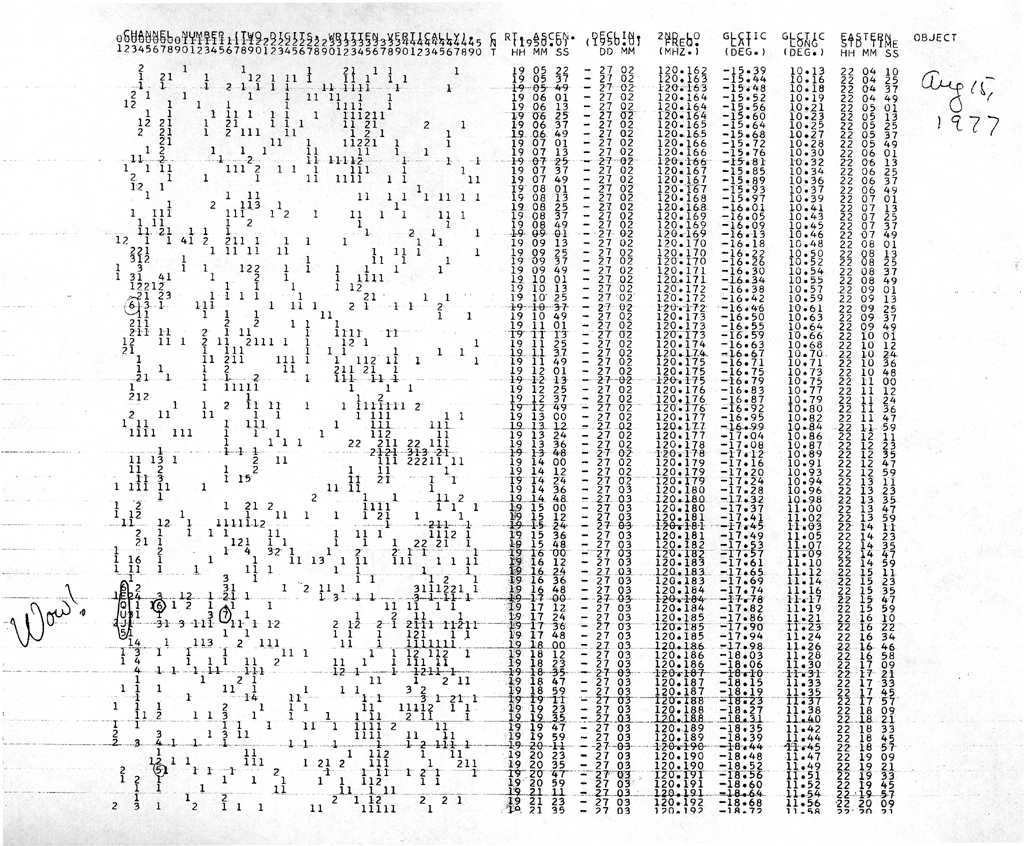
Big Ear had been scanning for alien radio signals since 1973, part of the longest-running SETI program in history. The telescope ran automatically. An IBM computer recorded the data to line printer paper in alphanumeric shorthand: numbers represented signal-to-noise ratios of 1 through 9, letters represented 10 and above. Under normal conditions, the printout was a field of 1s and 2s — background noise, essentially silence.
On August 15, 1977, the printout was not silence. Nobody noticed for several days.
The Cosmic Watering Hole
To understand why the signal mattered, you need to understand one number: 1420 megahertz.
Hydrogen is the most abundant element in the universe. In its neutral atomic form, it emits a precise electromagnetic signal at 1420.405751 MHz — the hydrogen line — when an electron flips its spin inside the atom. This emission frequency was first detected by physicists at Harvard in 1951. Every civilization advanced enough to build a radio telescope would know it.
In 1959, physicists Giuseppe Cocconi and Philip Morrison published a paper in Nature arguing that this frequency was the logical choice for interstellar communication. Any technological civilization, anywhere in the universe, would measure the hydrogen line. It required no shared cultural knowledge to identify. It was, as SETI theorist Bernard Oliver later put it, a cosmic watering hole: the natural meeting place for civilizations separated by light-years, the one frequency in the radio spectrum where all intelligent life would know to listen.
The frequency was also legally protected from terrestrial broadcasting under international agreements. Big Ear was listening in a clean, quiet band, at the one frequency scientists said to expect a genuine signal, on a night in August 1977.
What Jerry Ehman Saw
Dr. Jerry Ehman was a radio astronomer at Big Ear and a faculty member at Franklin University in Columbus. When NSF funding cuts disbanded the data analysis group in 1972, he stayed on as a volunteer, reviewing the telescope's printouts by hand in his spare time. Days after August 15, he sat down with the data from that night's observation.
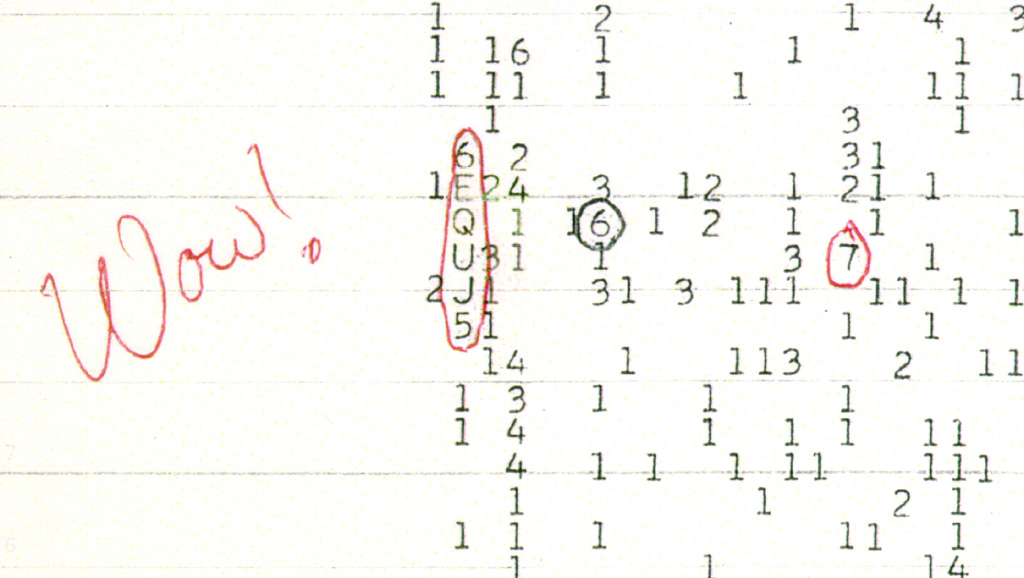
In channel 2, he found this sequence: 6EQUJ5.
Each character represented 12 seconds of signal intensity. Read in sequence, they described a bell curve: a signal rising from background noise, climbing rapidly, peaking at the center of the 72-second window, then falling symmetrically back to nothing. The character U, sitting at the peak, represented a signal between 30 and 31 standard deviations above background noise.
In radio astronomy, a signal 3 or 4 standard deviations above background is considered worth investigating. Thirty standard deviations is not a statistical fluctuation. By any conventional measure, it is a signal.
"I was astonished to see the string of numbers and characters '6EQUJ5' in channel 2 of the printout. I immediately recognized this as the pattern we would expect to see from a narrowband radio source of small angular diameter in the sky."
He reached for a red pen, circled the sequence, and wrote one word in the margin: Wow!
The Signal
Date detected: August 15, 1977, 10:16 PM EST
Duration: 72 seconds (Big Ear's full observation window for any sky point)
Frequency: approximately 1420.356 MHz — the hydrogen line
Peak intensity: 30–31 standard deviations above background noise
Character: narrowband, Gaussian profile, consistent with a deep-space point source
Source direction: constellation Sagittarius
Repetitions detected since: zero
Every Box Checked
The signal did not just appear at the right frequency. It had the right shape, the right character, the right behavior — a checklist of properties SETI scientists had theorized a genuine alien broadcast would display.
It was narrowband. Natural astronomical radio sources — supernovae, pulsars, nebulae — broadcast across broad swaths of the spectrum. A technological transmitter concentrates its power at a specific frequency for maximum efficiency. The WOW! Signal appeared in a single channel, less than 10 kilohertz wide.
It had a Gaussian profile. As Earth's rotation carried the source through Big Ear's beam, the signal rose and fell in a near-perfect bell curve. Ehman confirmed that the six data values followed the antenna pattern to better than 99 percent accuracy. This is exactly what you expect from a continuous-wave point source at great distance, a stationary object tracked only by the planet's rotation beneath the telescope.
It was consistent with a point source in deep space. It showed no signs of ground-based origin. Terrestrial interference would appear in both of Big Ear's feed horns simultaneously. The WOW! Signal appeared in one horn only — a fact that remains unexplained and simultaneously makes it more, not less, anomalous.
The Search That Found Nothing
Ehman's training immediately overrode his astonishment. A single detection proves nothing. He needed repetition.
Big Ear trained its beam on that region of Sagittarius repeatedly over the following weeks. Nothing. The observatory conducted approximately 100 follow-up observations of the same sky region. Nothing. The searches widened over the following decades: the META Array in 1987 and 1989, the NRAO 26-meter telescope in 1995, the Very Large Array in New Mexico in 1995 and 1996, the Mount Pleasant Observatory in Tasmania in 1999. All returned the same result.
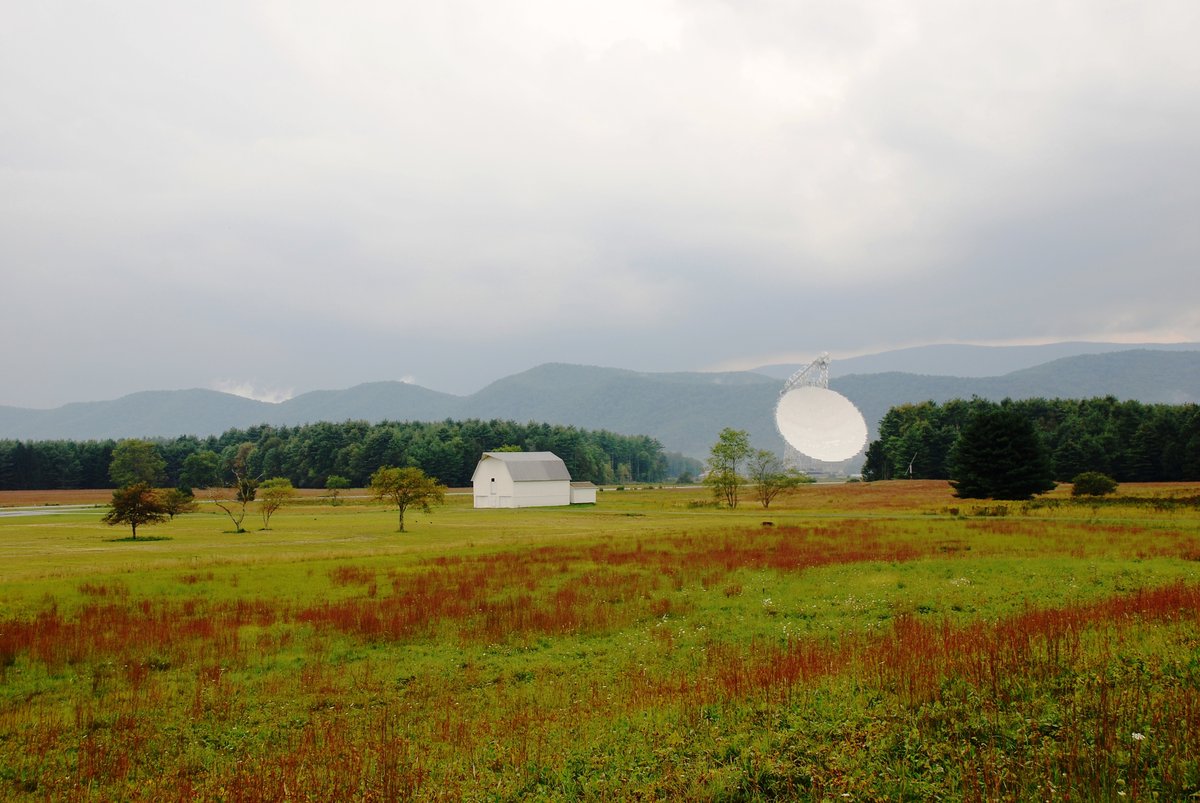
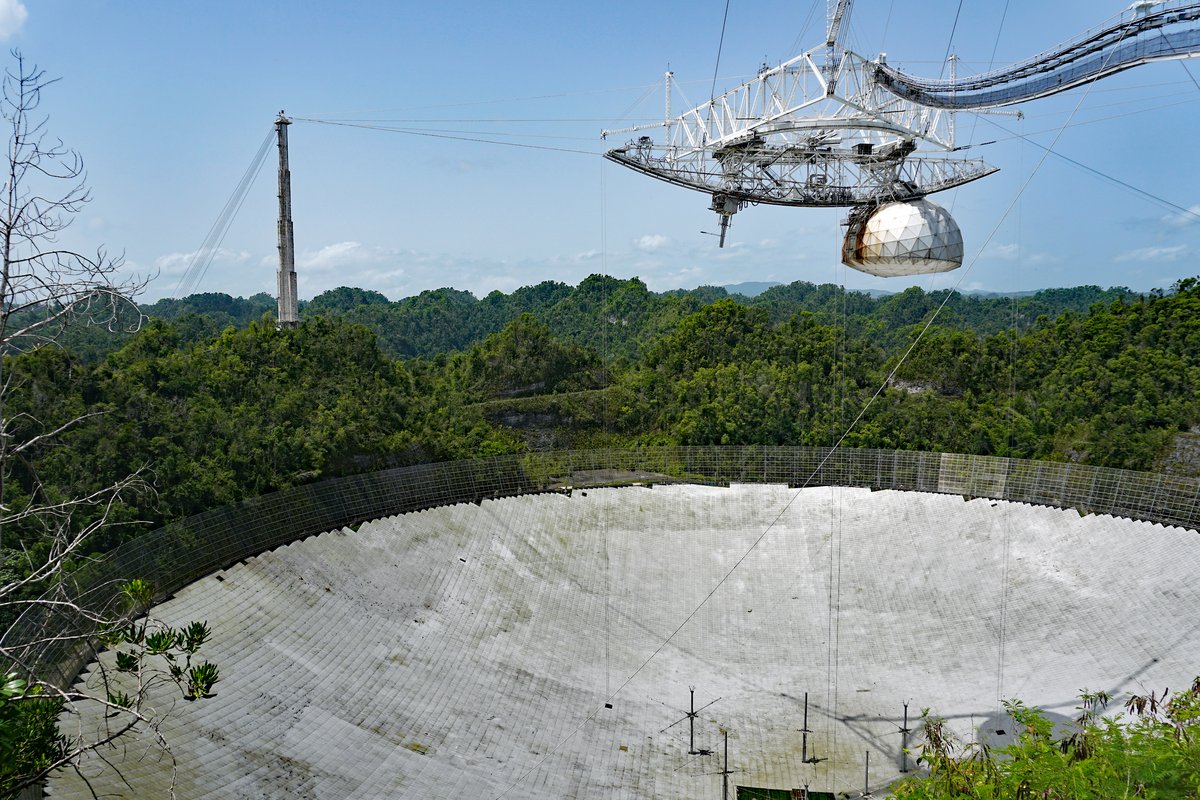
The most comprehensive modern attempt came in May 2022. Breakthrough Listen, the best-funded SETI program in history, coordinated simultaneous observations of a candidate star in the signal's sky region using the Robert C. Byrd Green Bank Telescope in West Virginia and the Allen Telescope Array in California. Two of the most sensitive radio astronomy instruments ever built aimed at the most plausible source location, searching frequencies from 1 to 2 GHz.
No signal was detected.
The Explanations That Don't Hold
In the nearly five decades since the detection, researchers have proposed several alternative explanations. None has survived scrutiny.
Natural astronomical source: ruled out. No known natural phenomenon emits a narrowband signal at the hydrogen line frequency. Natural radio sources broadcast across broad spectra. The signal's extreme narrowband character is inconsistent with any catalogued natural source.
Terrestrial interference: ruled out by geometry. The frequency is protected from terrestrial broadcasting. More critically, terrestrial interference would appear in both Big Ear feed horns simultaneously, not in the Gaussian pattern of a distant point source tracked by Earth's rotation.
The comet hypothesis: proposed in 2017 by astronomer Antonio Paris, who argued that comets 266P/Christensen and P/2008 Y2 were transiting the right region of sky and their hydrogen coma clouds could have produced the signal. Ehman's rebuttal was direct: the comets were not in the right position. Comet 266P/Christensen was approximately 55 minutes of right ascension away from the signal's source coordinates on August 15, 1977. More fundamentally, comets do not emit narrowband radiation at 1420 MHz. A hydrogen coma radiates across a broad spectral profile, not a single channel. The wider scientific community rejected Paris's hypothesis.
Ehman spent decades being careful about what he would and would not conclude. His most quoted formulation — "drawing vast conclusions from half-vast data" — captured the epistemological trap precisely. But in later interviews he was also direct about what the signal was: "I still can't figure out what it was," he said. And: "I'm convinced that the Wow! signal certainly has the potential of being the first signal from extraterrestrial intelligence."
The Telescope That No Longer Exists
In 1998, developers purchased the land from Ohio State University. Big Ear was demolished to expand an adjacent golf course from nine holes to eighteen and to build approximately 400 houses on the surrounding property. One of the most historically significant scientific instruments ever built was bulldozed for a fairway.
The WOW! Signal presents a category of scientific problem that existing tools may never fully resolve: the single detection. Science depends on reproducibility. A result that cannot be replicated cannot be confirmed or refuted. The signal was detected once, for 72 seconds, by an instrument that no longer exists. Every subsequent attempt to find it again has used more sensitive equipment and found nothing.
The original printout still exists. Ehman's handwriting is still there in the margin — one word in red pen, written without thinking, that became the name of the most credible SETI candidate ever detected.
If the signal was a deliberate transmission, it would represent the first confirmed contact between humanity and another civilization. It would confirm that intelligence is not a singular accident in the universe. It would make the apparent silence of the cosmos slightly less absolute and simultaneously more urgent.
If it was something else — a natural phenomenon not yet catalogued, a reflection, a glitch in the physics of the universe — it would still be remarkable: a demonstration that the cosmos contains processes we do not understand, operating at frequencies we designated for listening, in ways capable of fooling the best instruments of the 20th century.
The signal lasted 72 seconds. It has been silent for 47 years. The most honest summary of where the science stands remains the word Ehman wrote without thinking: Wow!
Works Cited
- Wow! signal — Wikipedia
- The Wow! Signal — Big Ear Radio Observatory (bigear.org)
- Wow! Signal 30th Anniversary Report — Jerry Ehman (bigear.org)
- Ohio State University Radio Observatory — Wikipedia
- Breakthrough Listen Search for the Wow! Signal — SETI Berkeley
- Water Hole (radio) — Wikipedia
- Cocconi, G. & Morrison, P. (1959). Searching for Interstellar Communications. Nature, 184, 844–846.
- Hydrogen Clouds from Comets — Paris (2017 comet hypothesis), arXiv
- Comet Claim Sparks Controversy — Astronomy Now
- Did Ohio State Detect an Alien Signal? — OSU College of Arts and Sciences
- New Explanations for the Wow! Signal — Centauri Dreams (2025)
- New Search Comes Up Empty — EarthSky