Athens, 430 BC
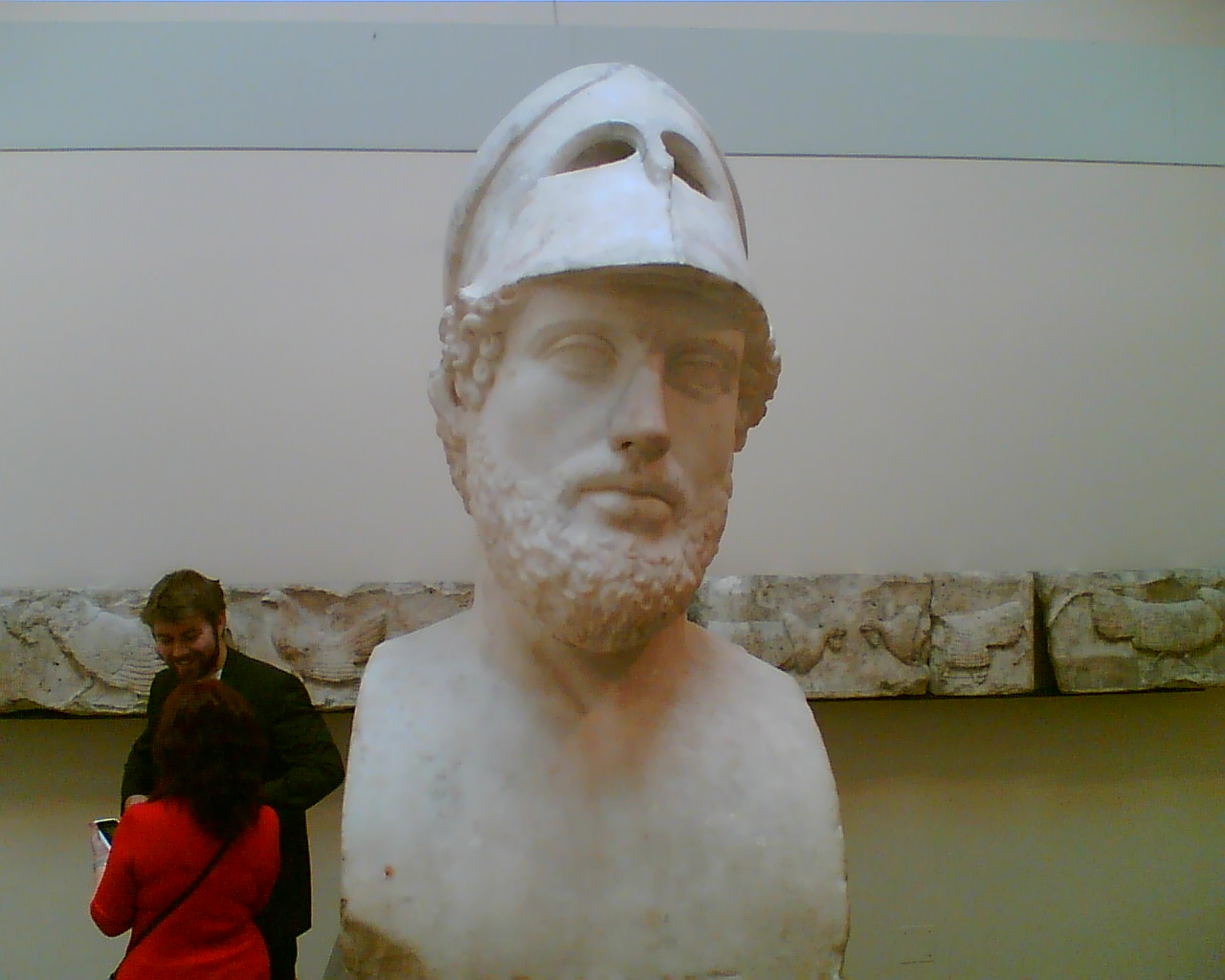
The second year of the Peloponnesian War had not been going badly for Athens. Under the strategy of Pericles, statesman, general, the architect of Athenian democracy's golden age, the city had adopted a posture of strategic patience. Athens controlled the sea. Sparta controlled the land. Let Sparta exhaust itself marching through Attica while Athenian ships raided the Peloponnesian coast. The war would be won through endurance.
The problem with this strategy was what it required of the civilian population. To avoid Spartan forces ravaging the countryside, Pericles ordered the rural population of Attica to abandon their farms and homesteads and move inside the city walls. They came in tens of thousands. Athens, already one of the largest cities in the ancient world, swelled to perhaps three or four times its normal density. People camped in the temples, in the streets, in the narrow spaces between buildings. The sanitation infrastructure, such as it was, collapsed under the weight of a population it was never designed to hold.
Thucydides, writing in the years after, notes that the plague arrived by ship at the port of Piraeus. It had been moving through other places first: through Ethiopia, through Egypt, through Libya and the eastern Mediterranean. The sailors brought it in.
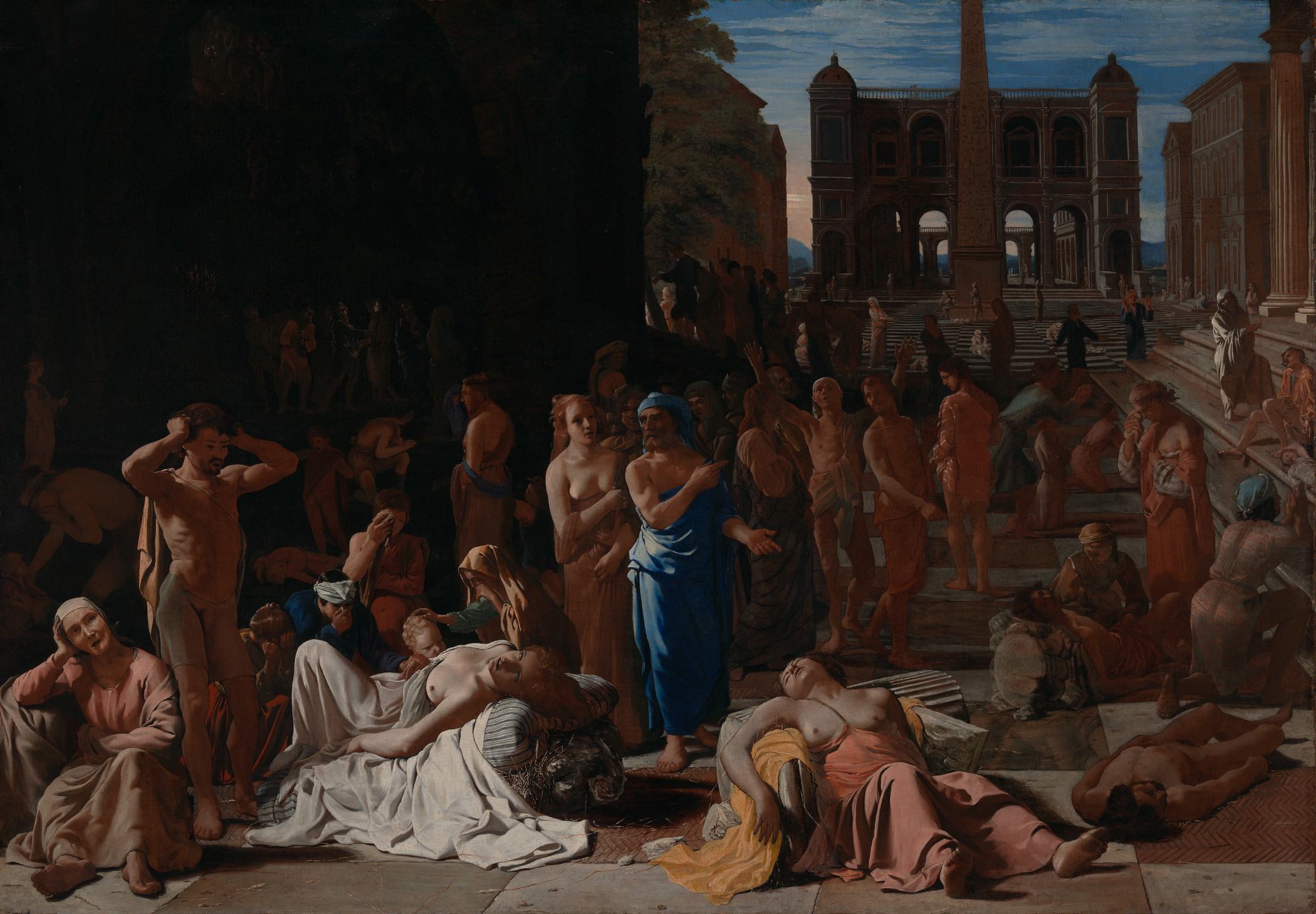
What Thucydides Saw
Thucydides caught the plague himself, survived, and wrote what became the first systematic clinical description of an epidemic disease in Western literature. His account in Book 2 of the History of the Peloponnesian War is specific in ways that continue to astonish epidemiologists: he was not describing a general pestilence, he was describing symptoms.
He describes the onset as sudden and violent: "People in good health were all of a sudden attacked by violent heats in the head, and redness and inflammation in the eyes." The disease moved quickly downward. The throat and tongue became inflamed, causing bleeding. Sneezing followed, then hoarseness, then a descending cough. Vomiting. The skin broke out in pustules and ulcers. Internal burning was so intense that patients could not tolerate even light clothing against their skin. The thirst was unquenchable. Patients threw themselves into cisterns. Most deaths occurred around the seventh to ninth day.
Those who survived the acute phase often lost extremities. Fingers. Toes. Some lost their eyesight. Gangrene spread to the genitals. Thucydides writes that some recovered with partial amnesia, emerging from the illness not fully knowing who they were.
| Stage | Description |
|---|---|
| Onset | Sudden violent fever, red and inflamed eyes |
| Head / throat | Throat and tongue bleed; breathing fetid |
| Chest | Sneezing, hoarseness, violent cough |
| Abdomen | Vomiting, retching, convulsions |
| Skin | Pustules and ulcers across the body |
| Extreme thirst | Unquenchable; patients threw themselves into water |
| Fatal cases | Death typically around day 7–9 |
| Survivors | Some lost fingers, toes, genitals, or eyesight |
The speed of the illness made conventional medical practice not merely ineffective but actively lethal. The doctors of Athens, Thucydides notes, were the first to die in greatest numbers: they were closest to the sick and had no protection against something they did not understand.
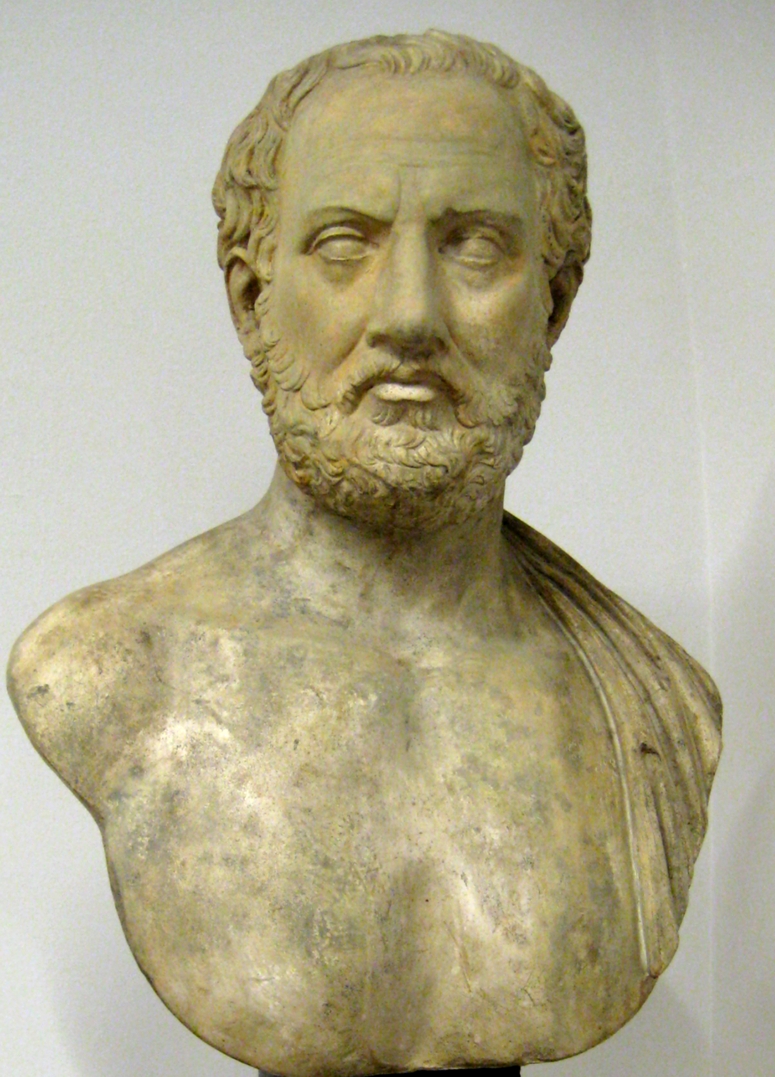
The Scale of the Catastrophe
Modern estimates suggest the plague killed between 75,000 and 100,000 Athenians over the course of several years, with the worst waves in 430 to 429 BC and a recurrence in 427 to 426 BC. That represents roughly a quarter of the city's population. Some estimates reach higher. The Athenian military lost between a third and a quarter of its fighting strength. Not in battle. To this disease.
Pericles himself died in 429 BC. Ancient sources differ on whether the plague was the direct cause, or whether a weakened constitution from a milder bout left him vulnerable to secondary illness. Either way, the man who had designed Athens' strategy of patient endurance did not live to see its outcome. His death removed the steadying hand that had held Athenian war policy together. The years that followed saw a succession of leaders whose decisions, the Sicily expedition most fatally, brought the city to ruin.
The plague, in this reading, did not merely kill people. It killed a particular kind of leadership at a particular moment, and the consequences rippled outward for decades.
The First Observation of Acquired Immunity
Buried in Thucydides' account is a detail that has only been fully appreciated in modern times. He notes that those who recovered from the plague developed what he described as immunity: they did not catch it again, and they were willing to nurse the sick because they knew they were safe. He observed that the disease did not strike the same person twice.
This is the first recorded observation of acquired immunity in human history. Thucydides had no conceptual framework for what he was seeing. Germ theory would not exist for another two millennia, but he described it accurately and drew the practical conclusion: survivors became the caregivers, because fear of the disease no longer applied to them.
The observation places a meaningful constraint on what the plague could have been. The pattern of lasting immunity, combined with the specific symptom sequence, rules out some candidates and is inconsistent with others. A disease that grants lasting immunity is behaving differently from one that recycles through the same host. Not all of the proposed identifications can account for it.
What It Did to the City
Thucydides' account of the social effects of the plague is as striking as his clinical description. When death becomes universal and indiscriminate, the rules that hold society together begin to dissolve.
"Fear of gods or law of man there was none to restrain them. As for the first, they judged it to be just the same whether they worshipped them or not, as they saw all alike perishing; and for the last, no one expected to live to be brought to trial for his offences."
— Thucydides, History of the Peloponnesian War, Book 2, Section 53 (trans. Richard Crawley)
Bodies were abandoned in the streets. The sick died alone because no one would come near them. The dead were thrown onto funeral pyres that belonged to other families, whatever was at hand. Traditional burial rites, which in Athenian culture were an important social and religious obligation, collapsed entirely. The mass grave discovered near the Kerameikos cemetery in 1994 reflects this: the initial burials were careful, with pottery offerings placed alongside the bodies. As the crisis deepened, the bodies were simply stacked. The pottery stopped.
Athenians began to believe the Spartans had poisoned their water supply. The Spartan forces besieging the city appeared to be spared. This was likely coincidence: open-air encampments, without the catastrophic overcrowding that had made Athens so vulnerable, presented a different epidemiological environment entirely. But the appearance of deliberate targeting fed a paranoia that made the social breakdown worse.
The Kerameikos Discovery
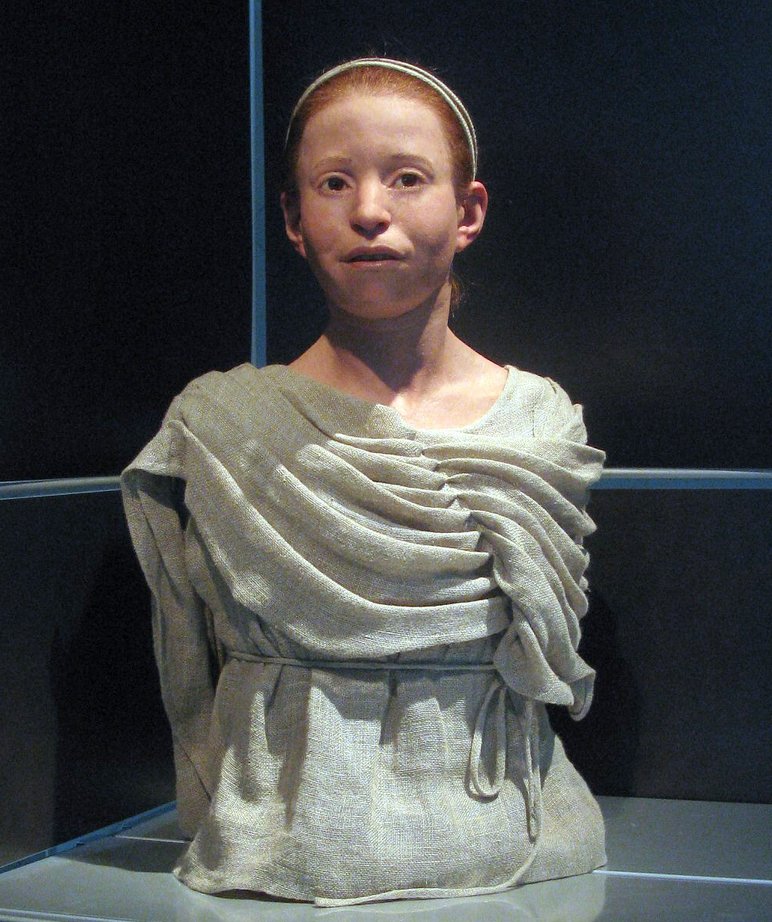
For most of history, the Plague of Athens existed only in Thucydides' text. Then, in 1994 and 1995, excavations near the Kerameikos cemetery in Athens uncovered a mass burial site containing approximately 150 bodies. The pottery associated with the grave dated to the second half of the fifth century BC. The manner of burial, initially careful, then increasingly hasty, matched Thucydides' description precisely.
In 2006, a team led by Dr. Manolis Papagrigorakis analyzed dental pulp from the skeletal remains. They identified DNA sequences consistent with Salmonella enterica serovar Typhi, the pathogen that causes typhoid fever. The finding attracted significant attention. If typhoid, then at least a name could be attached.
The scientific community was not convinced. Critics pointed to methodological concerns about ancient DNA contamination, including the presence of animals that had historically inhabited the site. More substantively, they noted that typhoid fever's clinical presentation does not match Thucydides' description well. Typhoid does not typically cause rapid onset, or the dramatic skin eruptions, or the loss of extremities. The mortality rate in the Kerameikos event was far higher than typhoid ordinarily produces. And typhoid does not typically kill the scavenger animals, dogs and birds, that Thucydides specifically notes were dying when they fed on the corpses.
The DNA result remains a data point, not a conclusion.
The Suspects
The disease has been proposed to be almost every significant pathogen known to medicine, and none of them fit cleanly.
Typhus was the candidate favored by a 1999 University of Maryland conference. Epidemic typhus strikes during conditions of overcrowding and deprivation, carries significant mortality, kills within approximately seven days, and can produce gangrene, all consistent with Thucydides. Its transmission mechanism, via body lice, would have been well-suited to Athens' overcrowded conditions.
Smallpox produces pustular rashes and high fever, matches some of the symptom sequence, and grants lasting immunity. But smallpox was known and recognized as a specific disease by later ancient writers, and none of them retroactively identified the Plague of Athens as smallpox, which they likely would have done if the symptoms matched.
Viral hemorrhagic fever, Ebola or a related filovirus, has attracted attention because some scholars interpret Thucydides' term for a specific symptom as consistent with hiccups now recognized in Ebola cases, and because the African origin in his account and the high caregiver mortality match the transmission pattern of person-to-person hemorrhagic fevers. RNA viruses, however, leave no retrievable ancient DNA. This hypothesis is currently untestable.
Measles causes rash, fever, and burning sensation, and a naive population encountering it for the first time could suffer catastrophic mortality. But measles does not kill animals, does not produce the specific skin ulceration Thucydides describes, and typically spares adults who survived childhood exposure.
The honest answer, after 2,400 years and a great deal of scholarship, is that no proposed identification fits all of Thucydides' observations simultaneously. The disease may have been a pathogen that no longer exists in recognizable form, or a co-infection that does not map to any single agent. Or Thucydides, despite his extraordinary precision, observed variations across multiple cases that produced a composite picture no single disease produced alone.
Why It Vanished
The plague recurred in 427 to 426 BC and then, apparently, stopped. It did not spread across Greece in the way later pandemics spread across continents. The Spartans besieging Athens contracted it in smaller numbers. But it did not become the defining epidemic of the ancient Mediterranean world. It killed Athens and then seemed to disappear.
The disease may have burned through the dense population of Athens specifically, a city uniquely vulnerable due to overcrowding, and exhausted its susceptible pool. Survivors who developed immunity would have created a population that no longer sustained transmission. If the pathogen required extreme density to propagate, the destruction of that density would have ended the epidemic naturally.
Alternatively, the disease may have been a hemorrhagic fever whose natural reservoir was confined to a specific animal host in Africa, an accidental export that could not sustain itself in a new environment. This would explain both the severity, a naive population encountering a pathogen with no evolutionary history in that region, and the disappearance once the initial wave passed.
Or the pathogen evolved. Diseases change across centuries. Something that produced Thucydides' symptom picture in 430 BC may have become something else entirely, leaving no recognizable descendant.
What Thucydides Left Behind
Whatever the plague was, Thucydides gave us something that outlasted Athens itself. His clinical description is the most detailed account of epidemic disease from the ancient world, written by a man who understood that precision mattered. If someone else encountered this thing, they should be able to recognize it. He was writing, in a sense, for doctors who had not yet been born.
He also gave us the observation about immunity, written down with the same detached precision. He did not theorize about why survivors were protected. He noted that they were, and that this had practical consequences: they could nurse the sick without fear. Two thousand years before Jenner, a historian described acquired immunity in a single sentence.
The plague ended the age of Pericles. It ended the particular confidence that had built the Parthenon and written the tragedies and produced the philosophy. Athens survived, won some battles, lost the war, and continued forward in a diminished form. But the city that emerged from the plague years was not quite the city that had entered them.
Thucydides understood this. He wrote the plague's history with the same care he gave to military campaigns, because he knew it was a different kind of war, waged against an enemy that left no record and observed no treaties. Two thousand four hundred years later, that enemy still has no name.