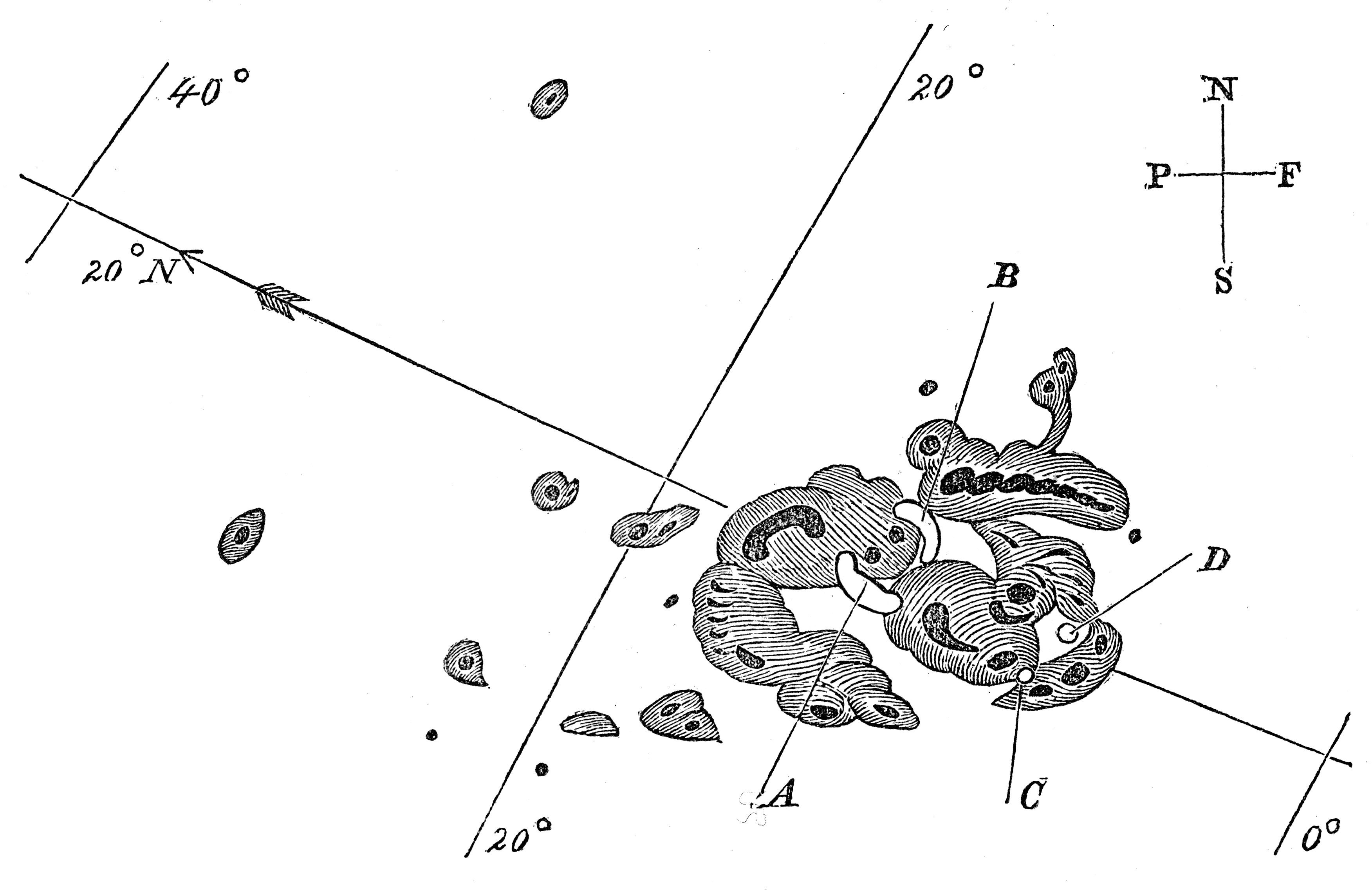
Richard Carrington was not a professional scientist. He was a brewer's son who had made enough money to build his own observatory in Redhill, Surrey, and dedicate himself to systematic solar observation. His method was meticulous: project the sun's image onto a screen at a standard size, trace every sunspot, record the positions daily.
On the morning of September 1, 1859, he was drawing sunspot group 520. Two brilliant white patches appeared within it — intensely luminous against the already bright solar disc. He timed them. They lasted approximately five minutes before fading. He ran out of the observatory to find a witness, but by the time he returned with one, the light had dimmed. His colleague Richard Hodgson confirmed the sighting independently from a different location. Carrington submitted a careful, restrained account to the Monthly Notices of the Royal Astronomical Society. He had seen something. It was extraordinary. He did not know what it meant.
What he had seen was the first solar flare ever observed by a human being. Seventeen hours later, something happened to the telegraph networks of the world.
17.6 Hours
A coronal mass ejection is a release of plasma and magnetic field from the sun's outer atmosphere. When one is directed toward Earth, the plasma cloud travels through interplanetary space at speeds ranging from 250 to 3,000 kilometres per second. Average transit time from sun to Earth is three to four days.
The Carrington CME left the sun on September 1st and arrived at Earth in approximately 17.6 hours. More than three times faster than a typical CME. The reason appears to be that an earlier, somewhat smaller CME had cleared the interplanetary medium ahead of it, removing the braking friction that ordinarily slows the ejected plasma. The Carrington CME was traveling through a prepared channel.
The impact on Earth's magnetosphere was measured in what scientists now call the Dst index: a measure of geomagnetic storm intensity derived from the distortion of the planet's magnetic field. Modern estimates place the Carrington Event's Dst at approximately negative 1,760 nanoteslas. The Quebec blackout of 1989, which left six million people without power for up to nine hours, had a Dst of approximately negative 589 nT.
The Carrington Event was three times more intense than the worst power-grid failure in modern North American history.
The Telegraph Ran on the Aurora
The effects began overnight on September 1st and continued through September 2nd. Across North America and Europe, telegraph operators began reporting things that had no precedent.
Some lines were dead. Some were producing surges of current that shocked operators who touched the keys. Some telegraph offices had sparks jumping from the equipment and setting paper on fire. The Pennsylvania Railroad's Pittsburgh office reported continuous showers of sparks flying from machinery.
And then there was Boston.
Operators in Boston and Portland, Maine, disconnected their batteries entirely and found they could still transmit. The auroral current flowing through the earth itself was sufficient to run the telegraph line. They operated auroral-powered for approximately two hours.
"We disconnected the batteries entirely and worked by the auroral current for about two hours, and very well, too." — Boston telegraph operator, published in Scientific American, 1859
The storm didn't just break the system. For a few hours, it substituted for the system's designed power source. The earth itself was supplying enough induced electricity to operate a commercial communication network.
The Scale
CME transit time: 17.6 hours (normal: 3–4 days)
Geomagnetic storm intensity (Dst): approximately –1,760 nT
Quebec 1989 blackout (for comparison): –589 nT
Aurora visible: Cuba, Jamaica, Hawaii, the Bahamas, Rome
Telegraph lines affected: ~280,000 km across North America and Europe
What People Saw
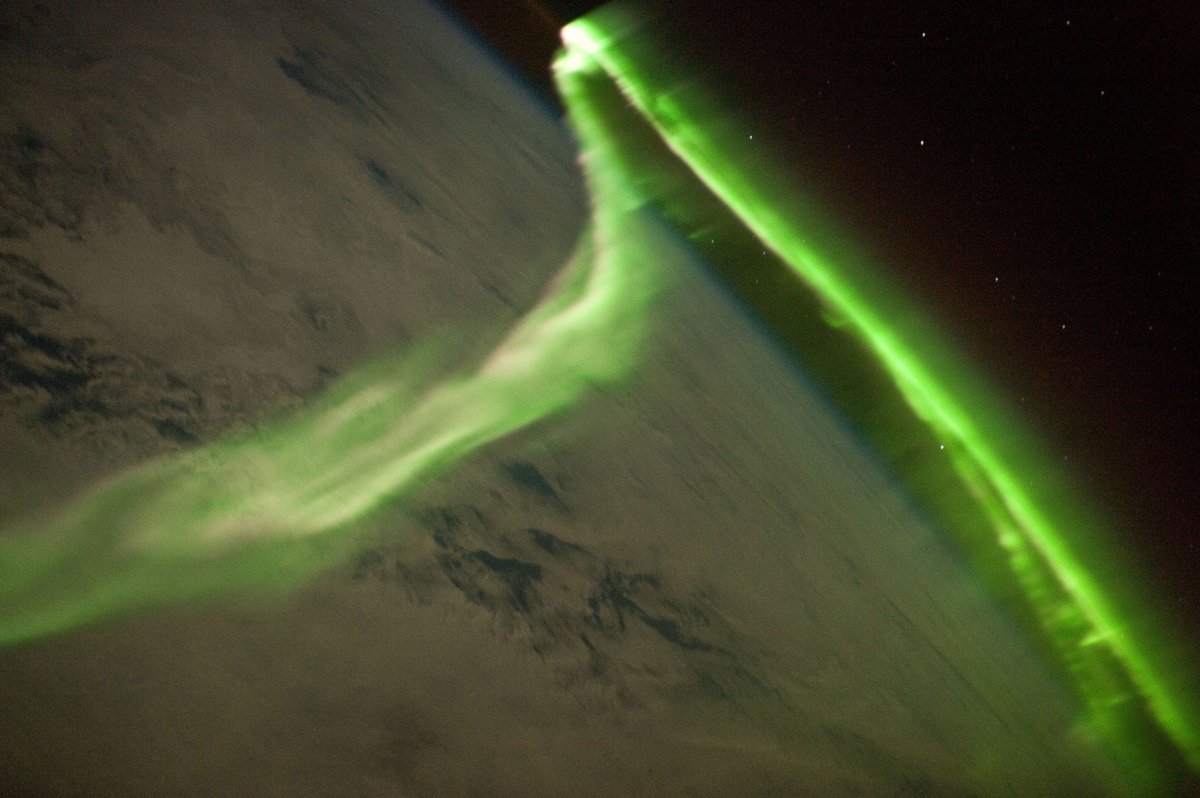
The aurora was visible at latitudes it had never been documented before. Not slightly farther south than usual. Dramatically farther south.
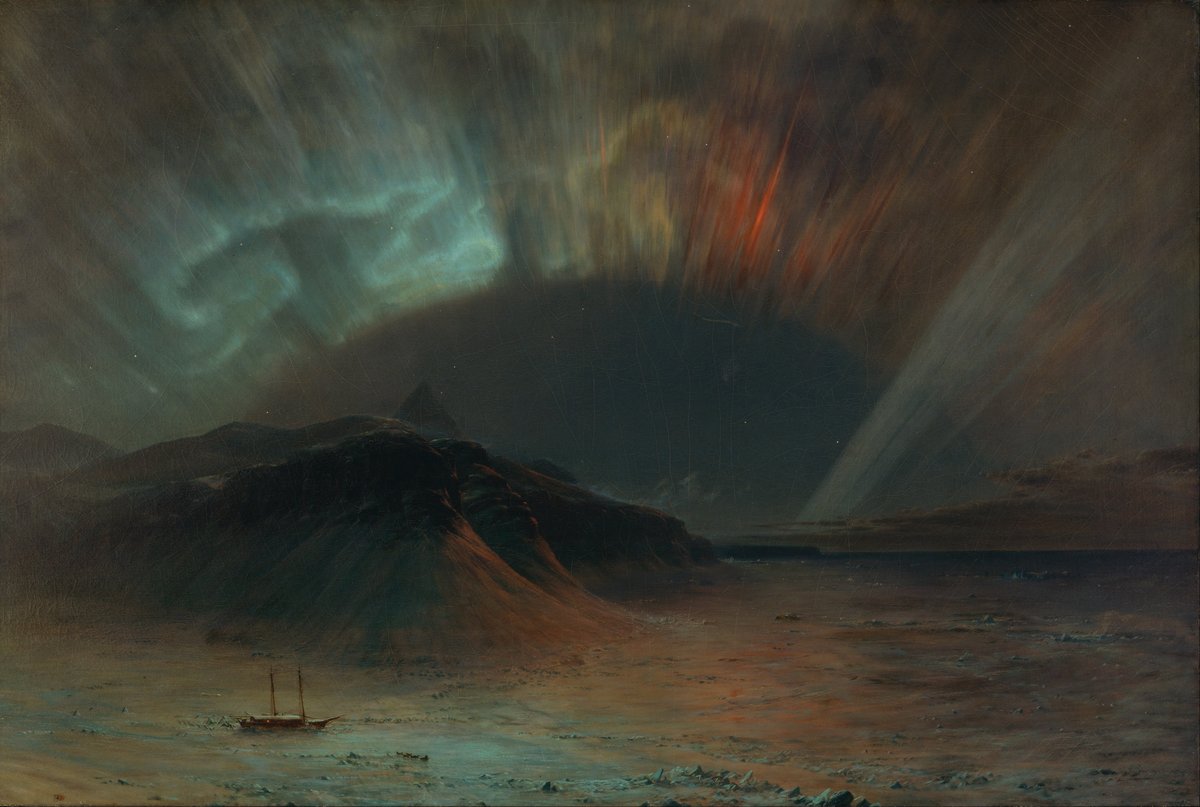
In Hawaii, the aurora was visible. In Cuba, Jamaica, and the Bahamas, it was visible. In Rome, Boston, and New York, it appeared at midnight with such intensity that people came outside to watch.
In the Rocky Mountains, gold miners woke before dawn, saw the light in the sky, assumed it was morning, and began making breakfast before realising the sun had not risen. Professor Elias Loomis of Yale, who compiled the most systematic scientific record of the event, documented reports from more than 150 locations. In multiple cities, observers reported the aurora as blood-red, covering the entire sky. Fire crews were called out in Milwaukee and other cities on false alarms triggered by the red light on the horizon.
In St. Louis, crowds gathered in the streets to watch. The aurora was bright enough that people could read newspaper print by it at midnight.
What It Would Do Today
The Carrington Event is not a historical curiosity. It is a risk model, and it is taken seriously by the people whose job it is to think about civilizational failures.
A 2013 report from Lloyd's of London, prepared for the insurance market, estimated that a repeat Carrington Event would cause between $0.6 trillion and $2.6 trillion in economic damage in the United States alone. The range reflects uncertainty about how quickly high-voltage transformers could be replaced. Those transformers are the critical nodes of the power grid. They are each the product of years of manufacturing. There are no large stockpiles. The Lloyd's report estimated that certain regions could remain without power for one to two years.
The Carrington Event has been cited in Congressional testimony before the Senate Homeland Security Committee. The Department of Homeland Security has identified geomagnetic storms as one of fifteen National Planning Scenarios, the list of most consequential disaster types requiring federal preparedness.
What makes it distinctive as a risk is its simultaneity. A hurricane destroys one region. A Carrington-level geomagnetic storm affects every part of Earth's surface at once, with the most severe effects at high latitudes, which is precisely where most of the northern hemisphere's industrial grid is concentrated.
Nine Days
On July 23, 2012, the sun released a coronal mass ejection of estimated Carrington-level intensity. It was directed toward Earth's orbital path.
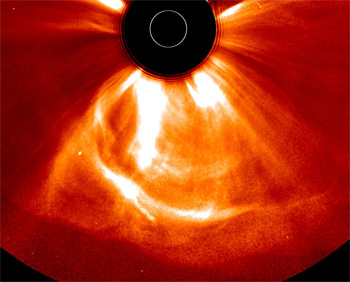
Earth was not there. The planet was nine days past that point in its orbit when the CME crossed the orbital line. The CME was detected by NASA's STEREO-A spacecraft, which happened to be positioned to observe it directly. Physicist Daniel Baker at the University of Colorado led the analysis, published in Space Weather in 2013: "Had it hit Earth, it almost certainly would have created a technological disaster by short-circuiting satellites, power grids, ground communication systems, and much of what Westerners have come to depend on for modern life."
NASA published a public-facing summary in 2014 under the headline: "Near Miss: The Solar Superstorm of July 2012."
The orbital mechanics involved no human decisions. There was no warning system that deflected anything. Earth was nine days ahead of the path. That was the entirety of the margin.
Works Cited
- Carrington Event — Wikipedia
- Carrington, R.C. (1859). Description of a Singular Appearance seen in the Sun on September 1, 1859. Monthly Notices of the Royal Astronomical Society, 20, 13–15.
- Baker, D.N. et al. (2013). A major solar eruptive event in July 2012. Space Weather, 11(10), 585–591.
- Near Miss: The Solar Superstorm of July 2012 — NASA
- Solar Storm Risk to the North American Electric Grid — Lloyd's of London, 2013
- Loomis, E. (1861). On the Great Auroral Exhibition of Aug. 28th to Sept. 4, 1859. American Journal of Science, 32, 318–335.
- Tsurutani, B.T. et al. (2003). The extreme magnetic storm of 1–2 September 1859. Journal of Geophysical Research, 108(A7), 1268.
- Geomagnetic Storms — NOAA Space Weather Prediction Center
- The Sun Could Send a Devastating Solar Storm — National Geographic
- Solar storm of 1859 — Wikipedia