A Ravine the World Already Knew
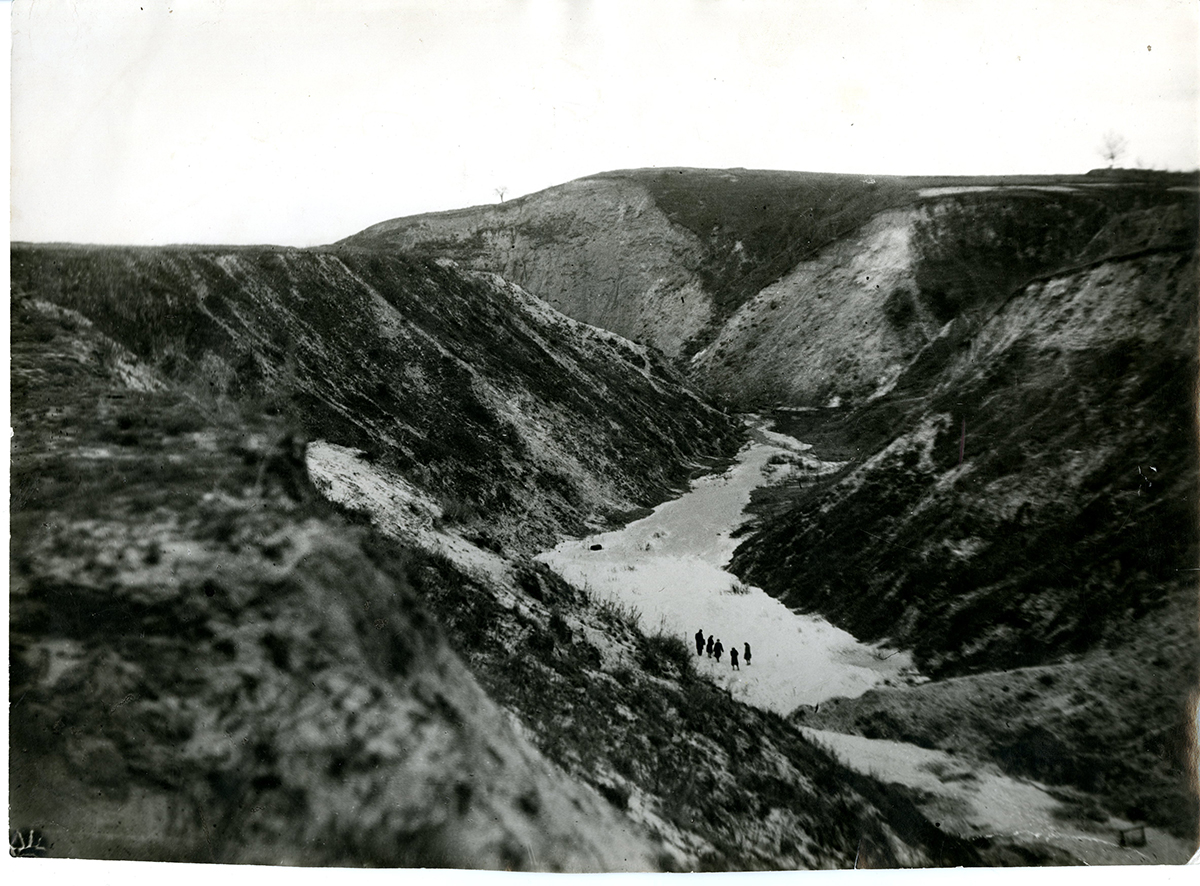
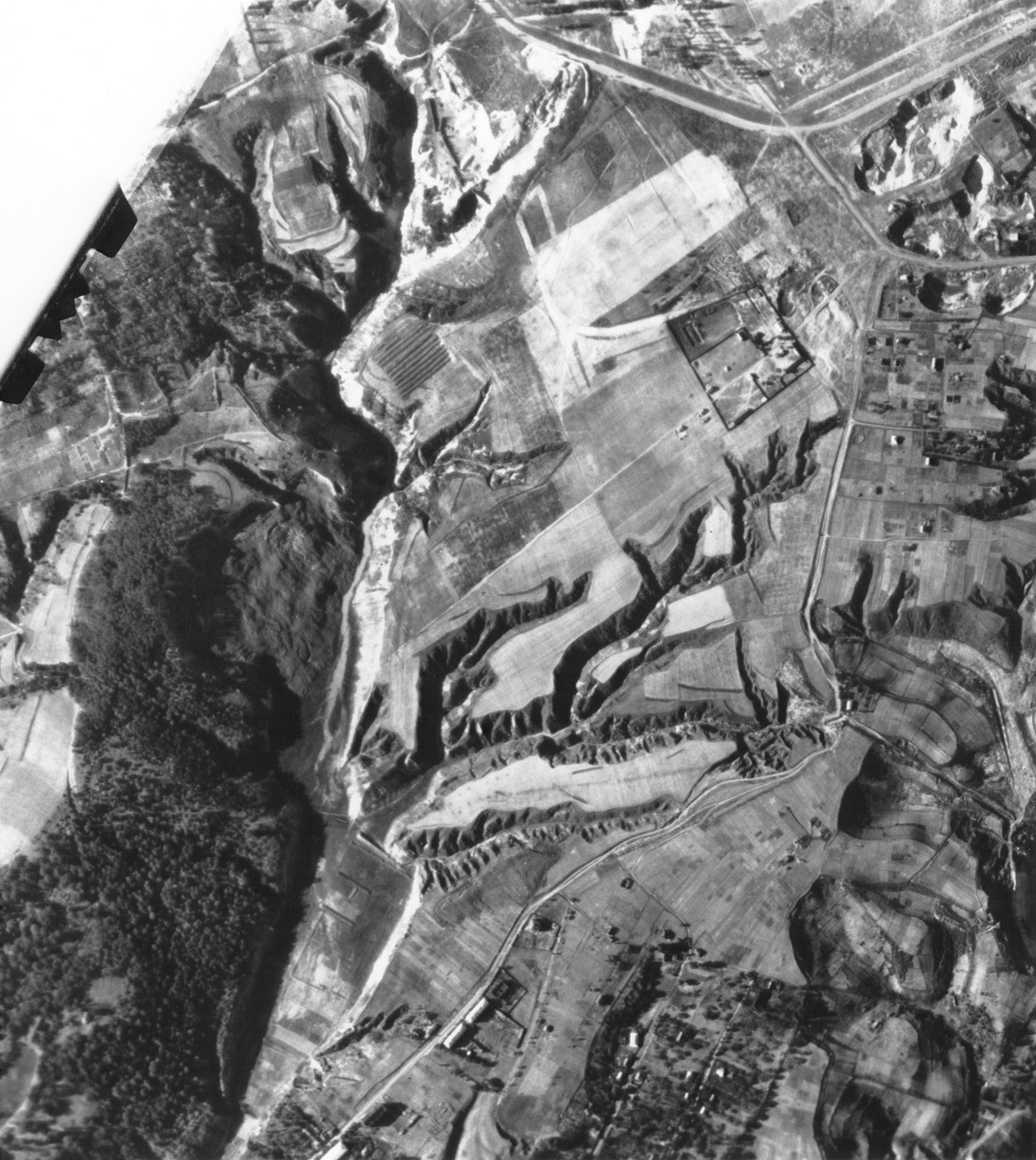
Kurenivka is a low-lying district in northwestern Kyiv, and above it, on the plateau, there was a ravine. Not an ordinary one. The ravine was Babyn Yar, a deep, branching gully cut into the soft loess soil, more than a mile long and in places over thirty metres deep. By 1950 its name already carried a weight that no city planner should have been able to ignore.
In September 1941, days after German forces took Kyiv, the occupiers ordered the city's Jews to assemble near the ravine. Over two days, September 29 and 30, SS and police units shot 33,771 Jewish men, women, and children at Babyn Yar. The killing did not stop there. Over the following two years the ravine became a killing site for Roma, Soviet prisoners of war, psychiatric patients, and Ukrainian resisters. Tens of thousands more died. Babyn Yar is one of the largest single massacre sites of the Holocaust.
After the war, the Soviet state built no memorial there. The official ideology folded the victims into the general category of "peaceful Soviet citizens," and the specific Jewish catastrophe went publicly unnamed. Then, in 1950, the Kyiv city authorities made a decision that turned an act of neglect into something stranger. They would fill the ravine in.
A Decade of Waste
The fill was not earth. It was pulp: a liquid slurry of loam, clay, and water, the waste product of the brick factories on the plateau above, chief among them the Petrivskyi brickworks. Starting in the early 1950s, the factories pumped this slurry through pipes directly into the gullies of Babyn Yar. It was cheap, it was convenient, and it solved two problems at once: the factories needed somewhere to put their waste, and the city wanted the ravine leveled for future development.
The engineering was as cheap as the idea. The slurry lagoon was held back by an earthen dam; accounts published after the Soviet collapse say the original plans reportedly called for concrete. Drainage in the gullies was poor, so the water never fully separated from the clay. What accumulated behind that packed-earth wall over ten years was not soil. It was millions of cubic metres of liquid ground, sitting some forty to sixty metres above a district full of homes, factories, a stadium, and a tram depot.
The ground itself made the arrangement worse. Kyiv sits on loess, a fine wind-blown silt that holds its shape while dry and loses almost all of its strength when saturated. The slurry being pumped into Babyn Yar was, in effect, pre-liquefied loess: ground that had already been turned into the thing engineers fear it becoming. It did not need a flood to become a fluid. It only needed a way out.
Below the dam, Kurenivka went about its life. Trams ran along Frunze Street, now Kyrylivska Street. Workers filed into the Krasin tram depot each morning. Nobody consulted the district about what was pooling on the heights above it.
The Morning of March 13
The dam did not fail without warning. On the evening of March 12, 1961, amid heavy rain and the spring thaw, the pumping station at the dump failed. Water that should have been drawn off stayed in the lagoon all night, rising against the earthen wall. By morning the dam was holding back more liquid than it ever had.
It gave way during the Monday morning rush. Even the time of the breach is disputed, which tells you something about what happened to the records: Radio Free Europe/Radio Liberty puts it at 8:30 a.m., other accounts closer to 9:20. Somewhere in that hour, the wall of packed earth dissolved, and the contents of a decade poured out of Babyn Yar and down the slope toward Kurenivka.
The Wave
What came down the hill was not water. It was liquefied earth, a moving wall of grey pulp that witnesses compared to a building in height. Reports collected later describe a front as much as fourteen metres tall and twenty metres wide, moving at the speed of a sprinting man. Those figures cannot be fully verified, and no figure from that morning can. What is certain is that the wave crossed the district in minutes and that almost nothing in its path survived.
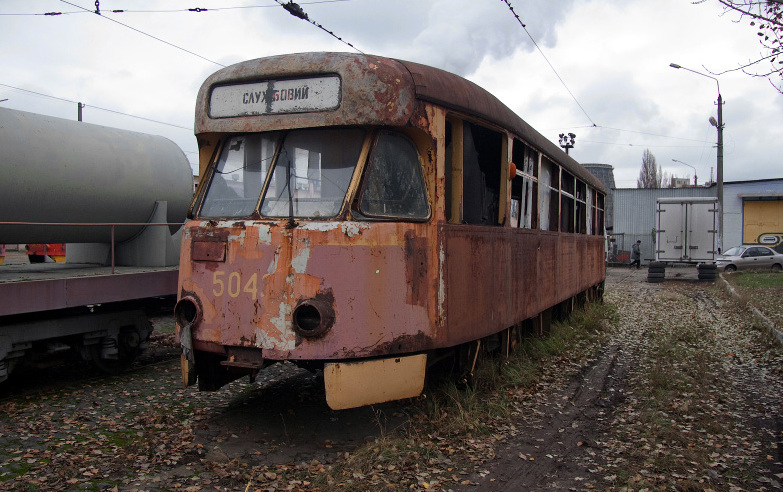
It caught the morning at its busiest. Trams were swallowed where they stood on their rails. A crowded bus stalled in front of the Spartak Stadium as the flow reached it. The wave rolled through the Krasin tram depot, where at least fifty workers died at their shift. In all, the mud destroyed 68 residential buildings and 13 administrative ones, flooded some thirty hectares of the city, and left around 1,300 people homeless.
Eyewitness Olha Bikus said she watched whole houses and trees carried away by the tsunami of slurry, which did not stop until around 10 a.m.
as reported by Radio Free Europe/Radio Liberty
Then the flow stopped, and the ground turned against the rescuers. The pulp had behaved like a liquid while it moved; once it halted, survivors and rescuers said, it began to stiffen and set around everything it had swallowed. Soviet troops surrounded the flooded perimeter almost immediately and let no one through. An army engineering battalion spent days digging the district out. The soldiers' work was real. Everything said about it afterward was not.
| Figure | Value | Note |
|---|---|---|
| Slurry released | 600,000+ m³ | Some accounts say millions; total accumulation ~4 million m³ |
| Buildings destroyed | 68 residential, 13 administrative | ~30 hectares flooded |
| Left homeless | ~1,300 people | |
| Official death toll | 145 | Soviet figure, unchanged since 1961 |
| Modern estimates | ~1,500 | 2012 Ukrainian study; some accounts run to 2,000 |
The Silence Machine
The second disaster began the same day, and it was quieter. Long-distance and international telephone and telegraph lines out of Kyiv were cut, and they stayed cut for days. A city of a million people had part of a district erased that morning, and for the outside world it simply did not happen.
Then the machine worked upward. Aircraft were reportedly rerouted around the site for weeks so that passengers could not see the grey scar from the air. Kyiv radio said nothing for three days. Around March 16, a terse official notice appeared locally, and that was all; the disaster was never reported to the wider Soviet Union. Photography at the site was forbidden, and the KGB confiscated film and photographs from anyone who tried.
The cruelest part of the silence was reserved for the dead. Victims were buried in different cemeteries scattered across Kyiv and the surrounding towns, and the records were falsified: wrong dates, wrong causes of death. Public commemoration was prohibited. A family could stand at a grave that lied to them about when and how the person in it had died.
There was a trial, of a kind. Officials held responsible for the dam were convicted of negligence in closed proceedings, and the case materials were reportedly destroyed afterward. Families of the dead reportedly received about 200 rubles, roughly two months' average pay. The state had weighed a neighborhood and settled the bill.
Counting the Uncountable
The official toll is 145. Almost nobody who has studied Kurenivka believes it, but the argument over the real number is itself part of the story. A 2012 Ukrainian study put the toll near 1,500, a figure the Kyiv historian Oleksandr Anisimov also supports, and some accounts run higher still, toward 2,000. Yet the historian Tetyana Yevstafyeva, who worked through the declassified files, argues the documented evidence supports a figure close to the official count.
Part of the problem is who the dead were. They were not a fixed list of residents that could be checked against a register. The wave took people in transit: passengers on trams and buses, workers changing shifts, people walking to jobs elsewhere in the city. A commuter buried under four metres of setting clay on someone else's street could simply become a missing person, and a missing person could become nothing at all.
The deeper problem is the records. The instrument you would use to count the dead, the civil registry of the city, is the same instrument that was used to hide them. When burial dates and causes of death were falsified by design, and case files destroyed, the truth stopped being recoverable. The Soviet Union did not just conceal the toll of Kurenivka. It made the toll unknowable, permanently.
Memory Returns
The erasure did not even pause for the disaster. In 1962, the year after the mud, party leaders ordered the leveling of Babyn Yar to continue, and a park was laid out over ground where tens of thousands had been murdered. The project that had caused the catastrophe simply resumed, more carefully.
One crack appeared early. The writer Anatoly Kuznetsov, who had lived through the German occupation as a boy in the streets beside the ravine, published his documentary novel Babi Yar in 1966, in a form gutted by Soviet censors. When he defected to Britain in 1969, he carried the complete manuscript out on photographic film, and the uncensored edition published abroad in 1970 set down both the massacres and what the city had later done to the ravine, including the flood of 1961. For two decades, the fullest account of Kurenivka in print was a banned book.
At home, the silence held for almost thirty years. Only in the late 1980s, under glasnost, did the first public accounts of the disaster appear in the Soviet press, and only after the collapse in 1991 did archives begin to open. Survivors who had been forbidden to mourn in public could finally say aloud what had happened to their street, their depot, their families.
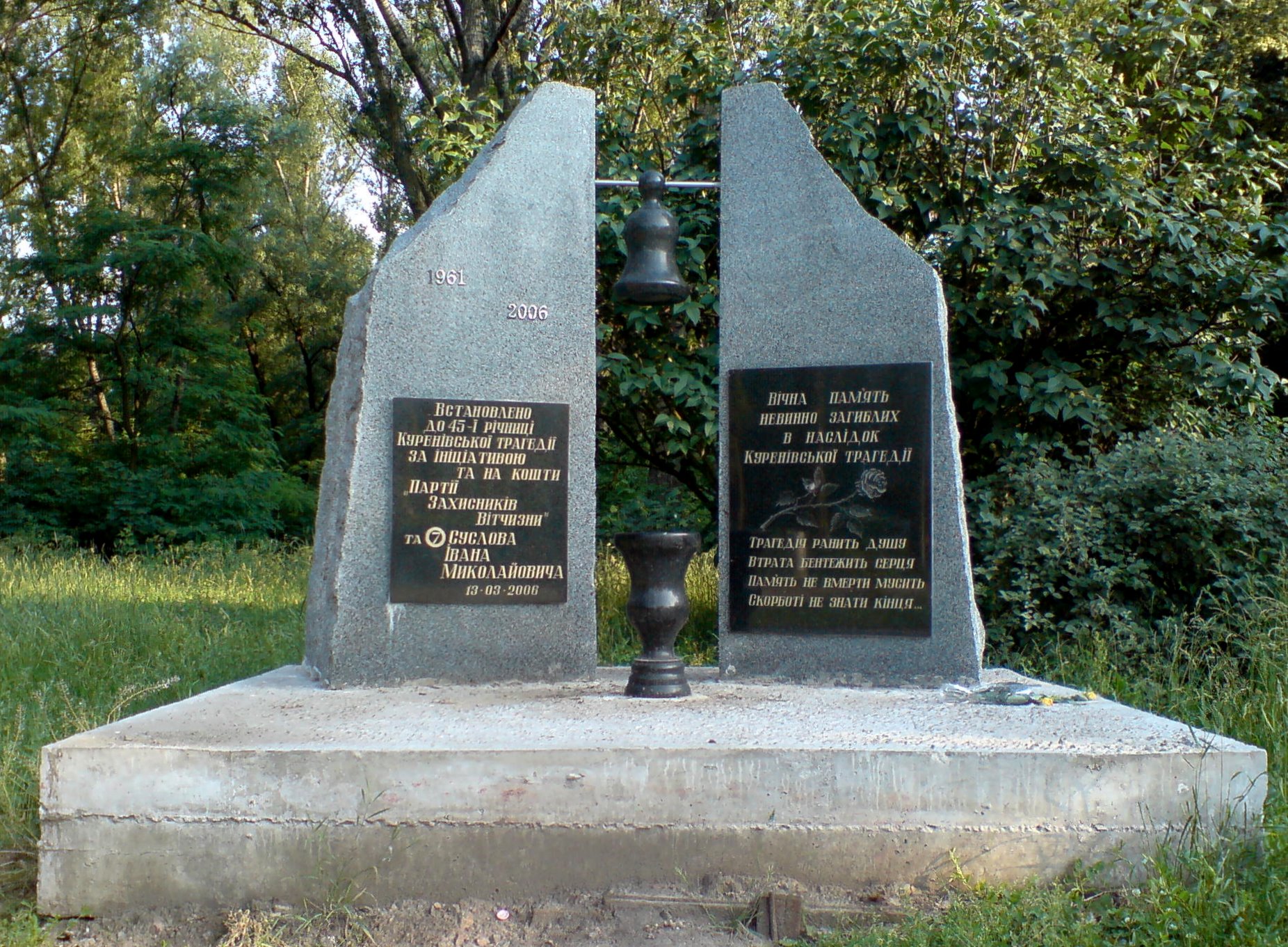
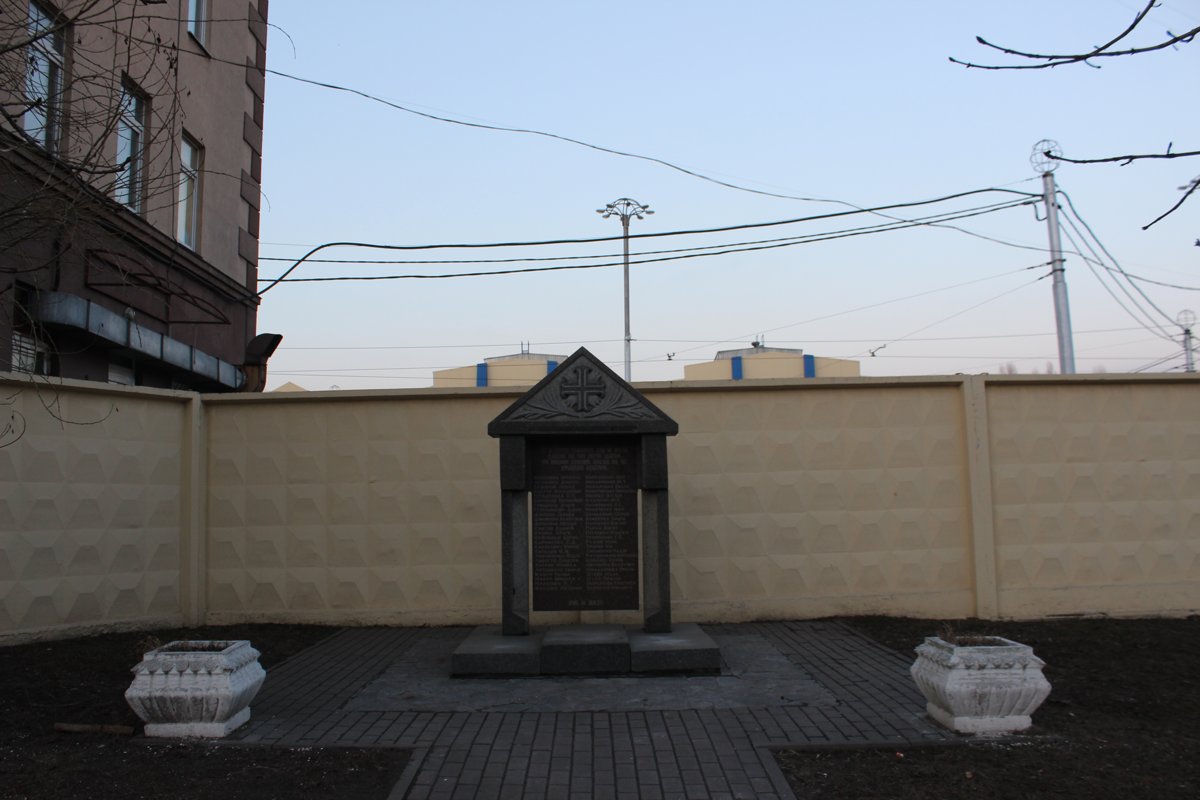
The monuments came slowly. The first memorial signs to the victims went up in Kyiv in 1995. In March 2006, on the forty-fifth anniversary, a monument to the victims of the Kurenivka tragedy was unveiled. Kyiv's transport workers raised their own memorial to the tram crews and depot workers who died at their posts that morning.
The Site Today
Kurenivka was rebuilt, and trams still run along Kyrylivska Street, past ground that was under four metres of setting clay one Monday morning in 1961. Most people who ride them have no reason to know it.
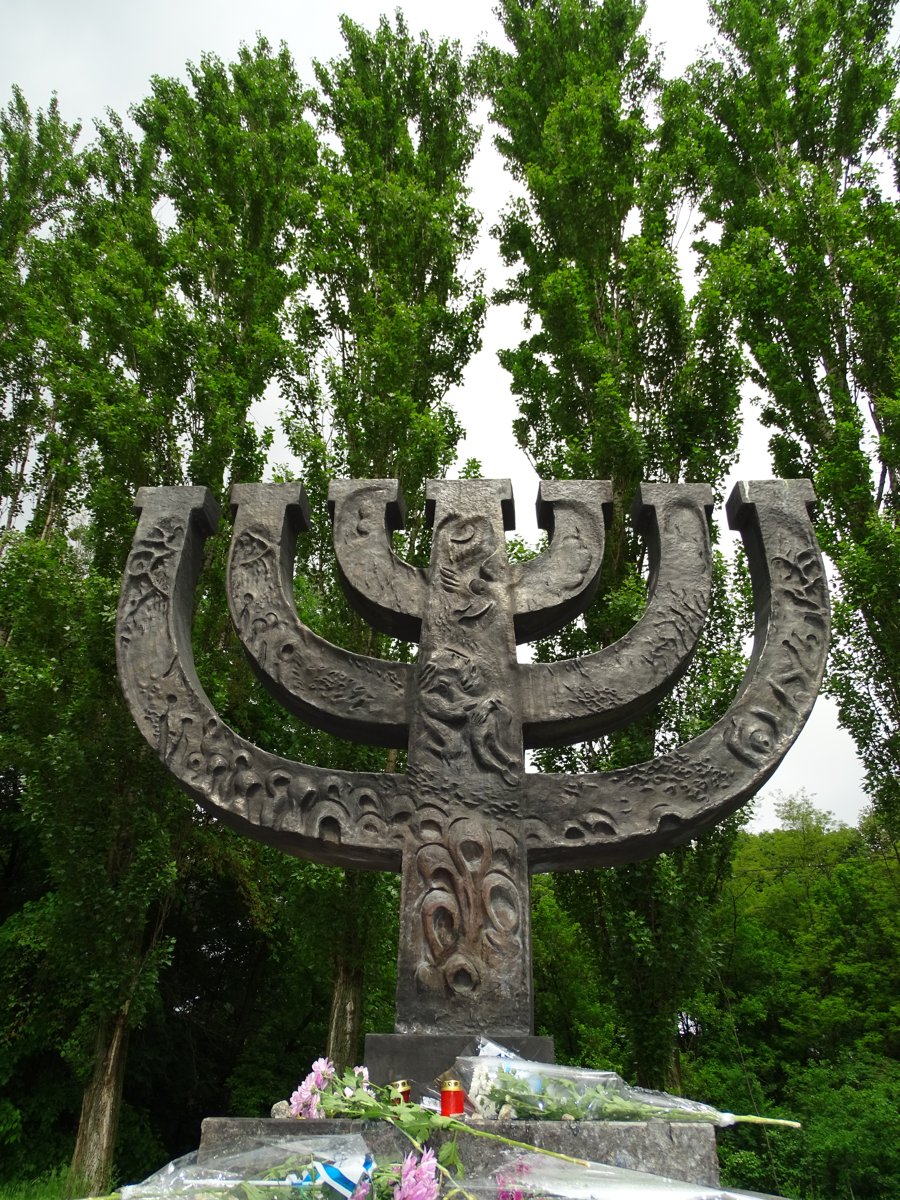
Babyn Yar is different. The ravine that Kyiv spent a decade trying to erase is now a National Historical and Memorial Reserve. The bronze Menorah memorial, raised in 1991 on the fiftieth anniversary of the 1941 massacres, stands near the old ravine's edge, and the Kurenivka monument stands within the same landscape of memory. Two erasures happened in that ground: one of the dead of 1941, unnamed for decades, and one of the dead of 1961, uncounted forever. The place now insists on remembering both.
The mud took minutes to cross a neighborhood. The silence took thirty years to break.