The Engineer Who Counted the Gates
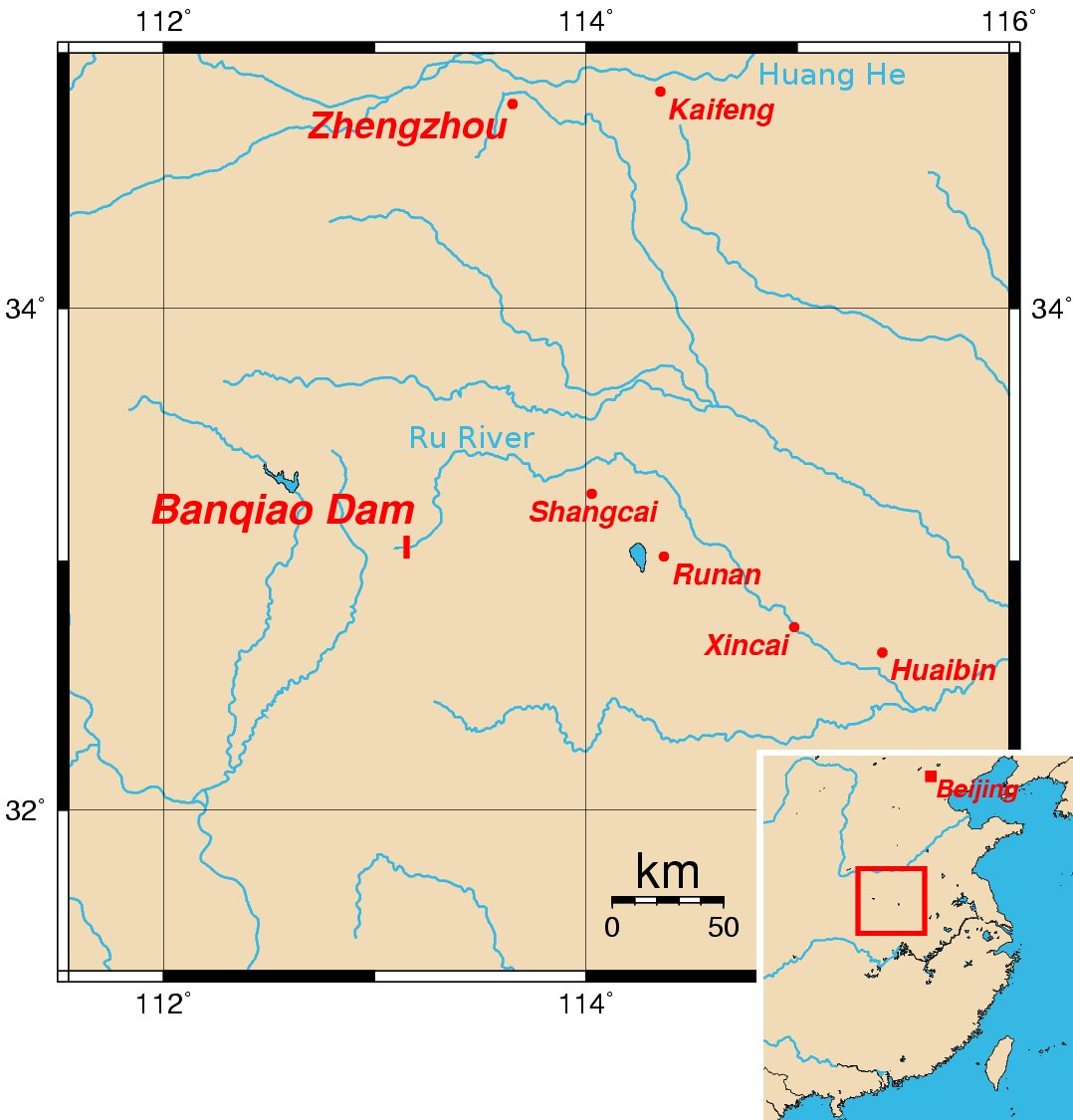
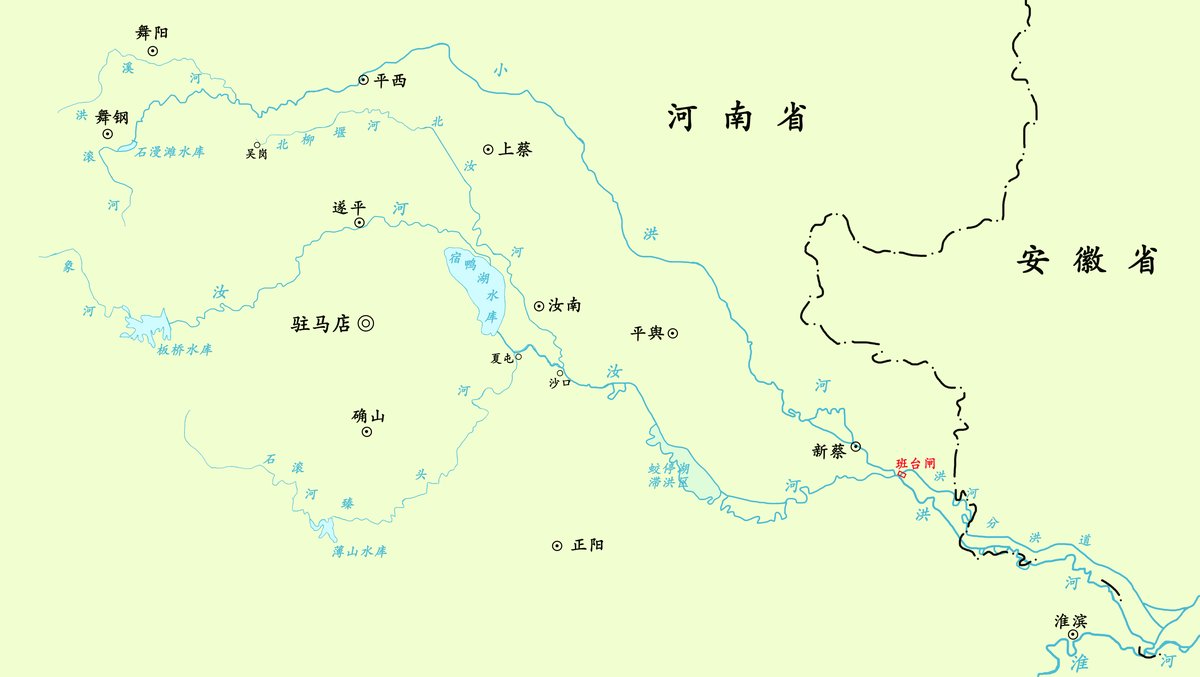
The Banqiao Dam was never meant to be famous. It was a low clay embankment, roughly 24.5 meters high, sitting on a modest tributary called the Ru River in Zhumadian prefecture, in the southern part of Henan Province. It was built with Soviet help in the early 1950s, during the first hopeful years of the new People's Republic. Construction began in April 1951 and finished in June 1952. After serious floods in 1954, engineers raised the crest by about three meters, and a reinforcement program in 1955 and 1956 gave the local people the confidence to call it the Iron Dam. They meant a dam that simply could not break.
That confidence had a flaw in it from the start, and the flaw had a name. Chen Xing was a hydrologist working on the region's dam program, and he did not trust the design. He argued that the whole plan leaned too hard on storing water and paid too little respect to the danger of flood. For Banqiao itself, his design called for twelve sluice gates, the openings that let a reservoir bleed off dangerous volumes of water in a hurry. Officials judged twelve gates too conservative and cut the number to five. Chen protested. For his trouble he was branded a right-wing opportunist and removed from his post. He was brought back around 1961, repeated the same warnings, and was largely ignored a second time. Five gates, not twelve. That single decision sits at the center of everything that followed.
A Year of Rain in a Day
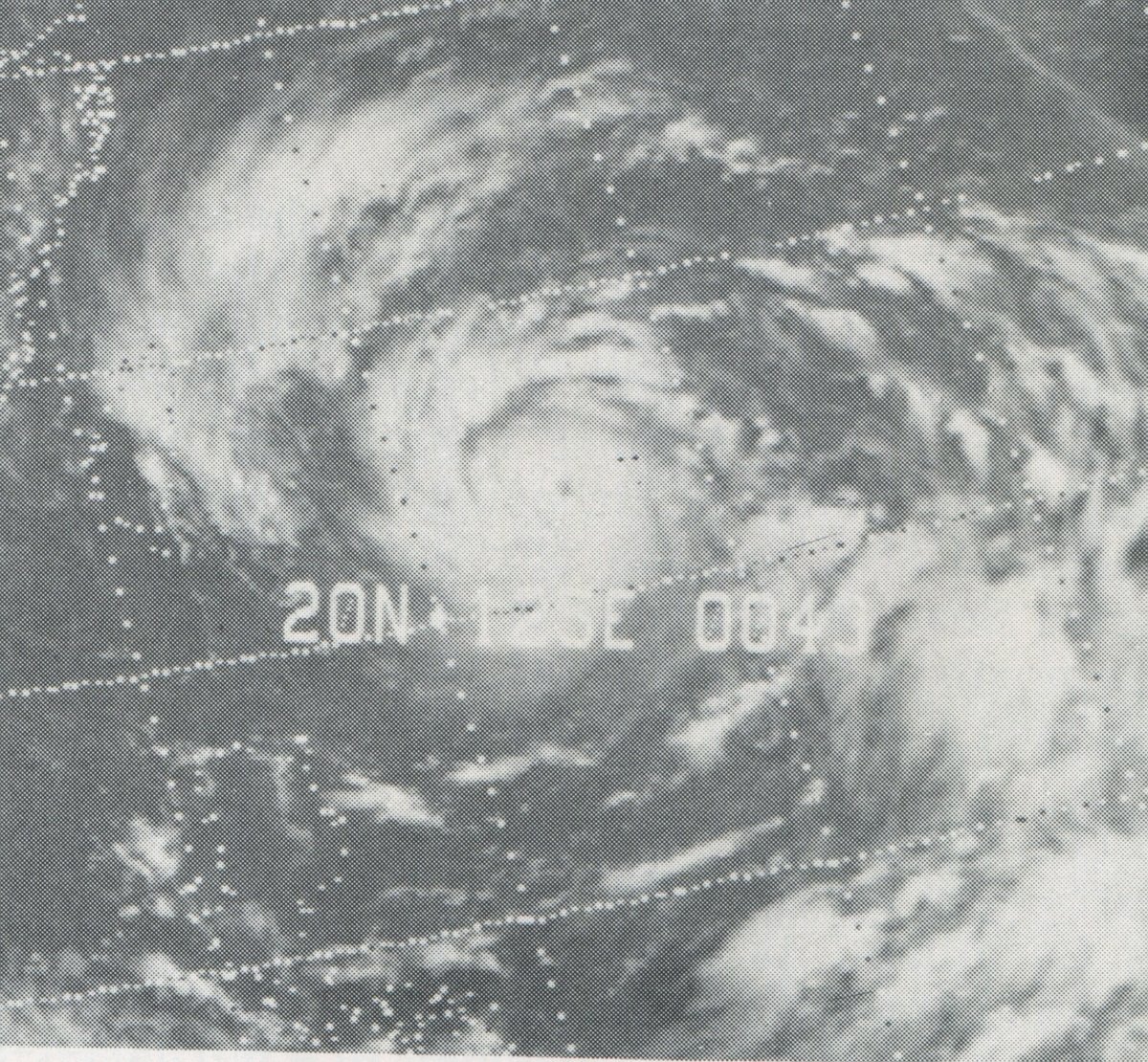
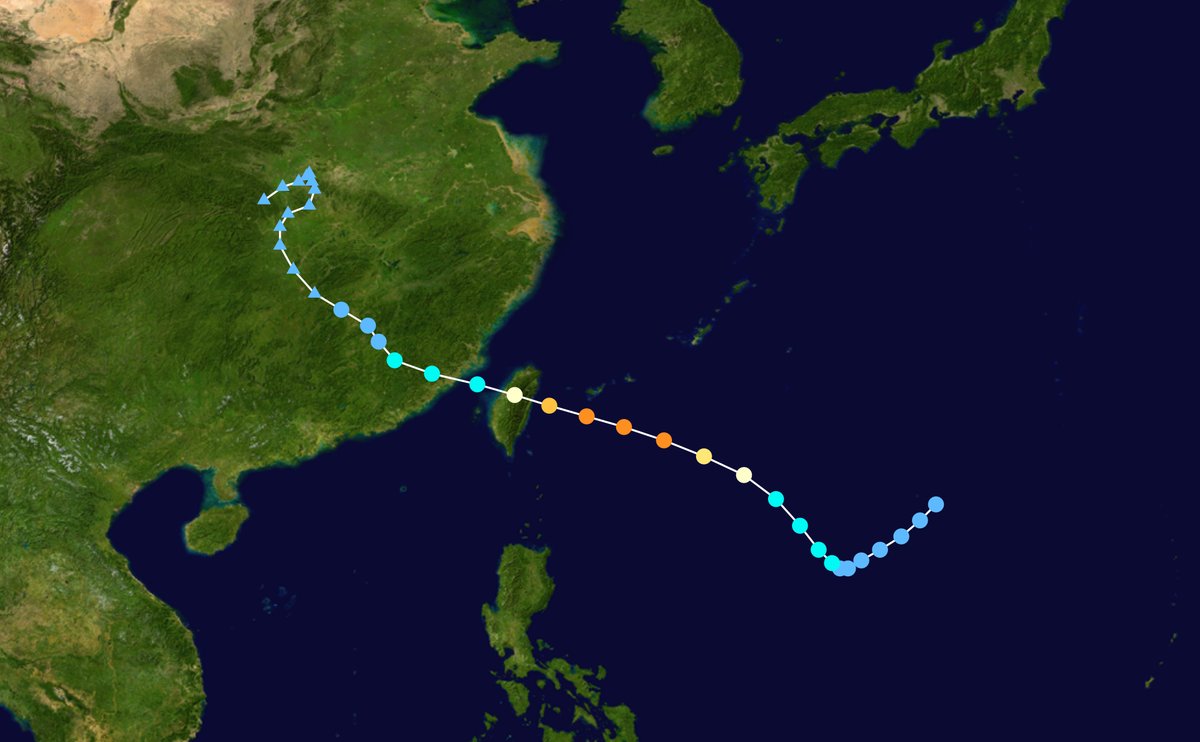
In early August 1975, Typhoon Nina came ashore. It crossed Taiwan on August 3, weakened, then pushed inland over China. Typhoons usually fade quickly once they move over land, starved of the warm ocean water that feeds them. Nina did not fade. A ridge of high pressure blocked its exit, and the dying storm stalled over Henan and wrung itself out over the hills above the Banqiao and Shimantan reservoirs.
The rainfall figures are hard to believe. The dam had been engineered against a once-in-a-thousand-years storm of about 306 millimeters of rain in a day. On August 7, one gauge near the center of the storm recorded roughly 1,060 millimeters in a single day. That is more than the region's entire normal yearly rainfall of about 800 millimeters, falling in twenty-four hours. Queshan County logged around 1,100 millimeters over three days. Forecasters had expected something closer to 100. Britannica describes the deluge as roughly twice the size of the thousand-year design flood.
Then Chen Xing's old warning came due. He had said that too many dams built too close together, with too little spillway capacity, was a recipe for disaster, and the five gates at Banqiao could not do their job. Two decades of silt had built up against the upstream face of the dam, partly choking the outlets. Even wide open, the five gates could not release water fast enough to keep pace with what the sky was pouring into the reservoir. Communications had gone down in the storm, so the coordinated, controlled releases that might have relieved the pressure never happened cleanly.
One O'Clock in the Morning
By late on August 7 the reservoir was still climbing. A first failure warning went out around 9:30 that night. The water rose to about 117.94 meters above sea level, roughly 0.3 meters, a single foot, over the top of the wave-protection wall. Water began pouring over the crest. A clay dam does not survive being overtopped. Water running over the top of an earthen embankment cuts down into it, and the cut only deepens, and there is no stopping it once it starts. The Iron Dam began to come apart in the dark.
At roughly one in the morning on August 8, 1975, Banqiao gave way. About 700 million cubic meters of water drained out of the reservoir in some six hours. Downstream accounts describe a flood wave on the order of ten kilometers wide and three to seven meters high, moving at around fifty kilometers an hour into a countryside full of sleeping villages. Those wave dimensions are widely repeated, but they rest largely on a single line of sourcing, so they are best read as reported rather than measured. The inundation zone ran something like 55 kilometers long and 15 kilometers wide, and temporary lakes swelled to as much as 12,000 square kilometers.
The dam they called unbreakable failed the way earthen dams always fail. Not with a crack, but with the water simply climbing over the top and refusing to stop.
On the mechanics of an overtopped clay embankment
Sixty-Two Dams
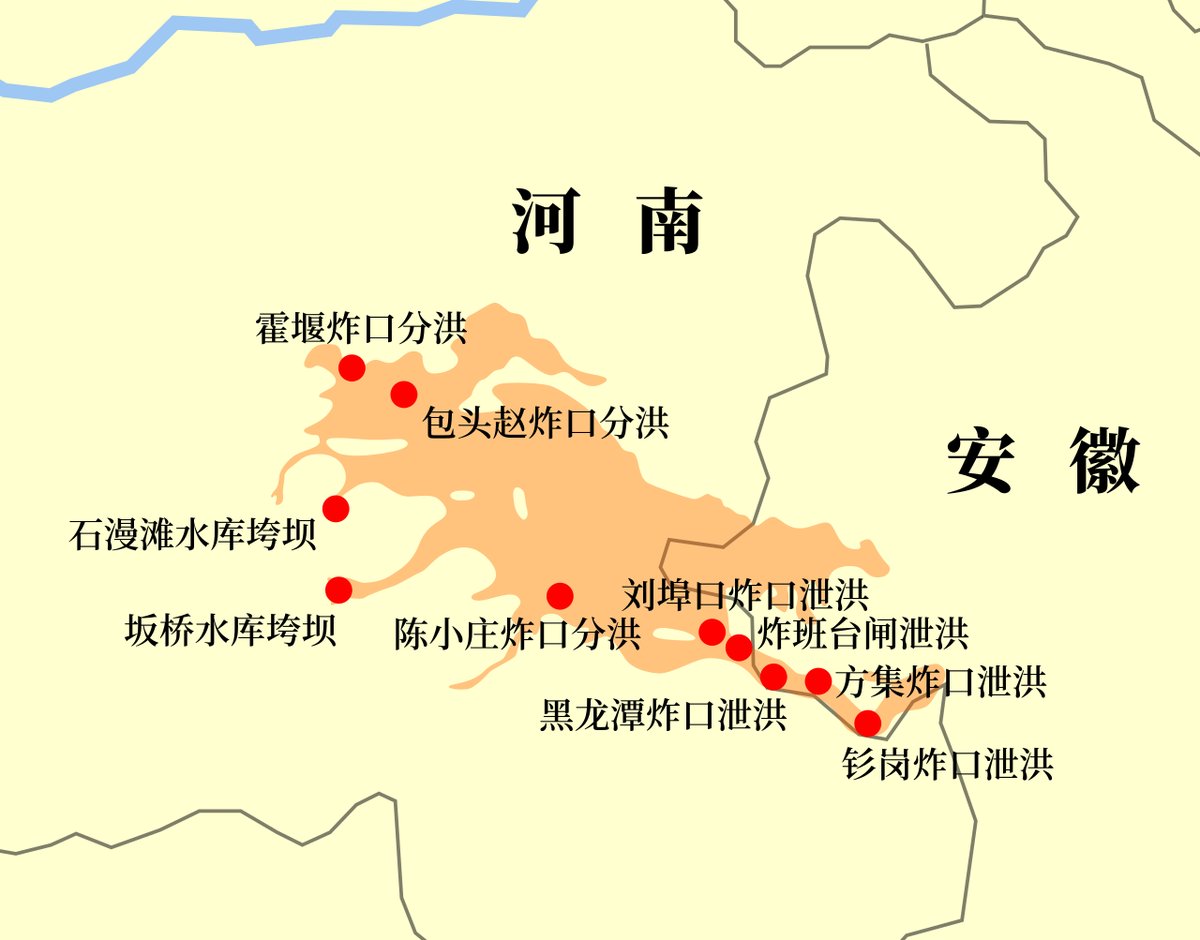
Banqiao did not fail alone. The same storm on the same night brought down the larger Shimantan Dam, and then, in a chain reaction across the region, a total of 62 dams collapsed. Each failure sent its own reservoir downstream into the next, and the flood grew as it went. Somewhere between five and seven million houses were destroyed. The flooding ultimately affected on the order of ten million people across roughly 30 cities and counties.
This is the detail the short version of the story usually loses. It was never simply the case that one dam broke. It was a whole landscape of reservoirs, built too fast and too close together, tipping over one after another in a single night. Banqiao is the name that survived because it was the largest and most trusted. What actually happened was the collapse of an entire flood-control network.
How Many Died
This is where the story demands care, because the numbers were suppressed, revised, and argued over for decades. What can be said cleanly is that the toll falls into two very different bands, and reputable sources disagree about which is closer to the truth.
The direct drowning deaths, the people killed by the floodwater itself in the first hours and days, are most often given as about 26,000. That is the figure the Chinese government has used. But most of the dying came after the water had passed. Whole districts were cut off with no food, no clean water, and no medicine, and famine and epidemic disease moved through the survivors in the weeks that followed. Runan County alone reportedly had 320,000 of its 500,000 residents needing medical attention.
When you try to count those later deaths, the estimates split sharply. A preliminary tally in August 1975 by the Henan Party committee put the deaths at about 85,600 within Henan and suggested the total would not exceed 100,000 including people from outside the province. In the 1980s, delegates to the Chinese People's Political Consultative Conference put the toll at around 230,000. A 1990s account, later echoed by a 2005 Discovery Channel program, gave roughly 26,000 from the flooding plus about 140,000 from the famine and epidemics that followed, for around 240,000 in total. Human Rights Watch, in 1995, cited a figure near 230,000.
So the honest range runs from roughly 85,000 to 100,000 at the low, official-adjacent end, up to somewhere near 230,000 to 240,000 at the high end. About 26,000 people drowned in the flood itself. In the hungry, disease-ridden weeks that followed, the total climbed into the range of 85,000 to 240,000, depending on whose count you trust. Even at the low end, that makes Banqiao one of the deadliest structural failures in history, and quite possibly the deadliest dam disaster ever recorded.
| Estimate | Figure | Origin |
|---|---|---|
| Direct drowning | ~26,000 | Chinese government figure |
| Within Henan | ~85,600 | Henan Party committee, Aug. 1975 |
| Total, low band | <100,000 | 1975 provincial estimate |
| Total, high band | ~230,000 | CPPCC delegates (1980s); HRW (1995) |
| Total, high band | ~240,000 | 1990s account; Discovery (2005) |
Thirty Years of Silence
For most of a generation, the outside world had almost no idea any of this had happened. The government and the Party stayed silent, and domestic coverage was suppressed. The scale of the disaster simply did not leave the country. The story leaked out slowly, first in a 1987 book by the journalist Yu Weimin, then in a 1995 volume, The Great Floods in China's History, which carried a preface by Qian Zhengying, the Minister of Water Resources at the time of the disaster. That same year, a Human Rights Watch report carried the numbers into Western view.
The full records were only declassified in 2005, three decades after the water came down, when Chinese, Italian, and American scientists finally sat together in Beijing to discuss what had occurred. That thirty-year silence is a large part of why so few people outside China have ever heard of the deadliest dam failure on record. A disaster that killed tens of thousands was kept quiet long enough that the rest of the world never learned to name it.
What the Popular Story Gets Wrong
Because the facts stayed buried for so long, the version that circulates online tends to be sharpened into something cleaner than the truth. A few corrections are worth making.
The first is the flat claim that 240,000 people were killed, repeated as if it were settled. It is the high estimate, and it is disputed. The immediate drowning toll is far lower, near 26,000, and the total is a genuinely uncertain range. It should always be hedged. The second is the idea that Banqiao was a concrete dam. It was a clay embankment, and that matters, because earthen dams fail catastrophically once water tops them, which is exactly what happened here. The nickname Iron Dam described a feeling of invincibility, not the building material. The irony is the whole point, not the metallurgy.
The dramatic wave figures, ten kilometers wide and fifty kilometers an hour, are reported rather than precisely measured, and are best presented that way. And the neatest error of all is the phrase the Banqiao dam broke, as if it were one structure and one moment. It was a cascade of 62 dams, with Shimantan as a major second failure. Banqiao is the name we remember, but it was a system collapse.
The Lesson of the Iron Dam
The reckoning, when it came, was real if belated. The economic damage was put at about 3.5 billion yuan. The Jingguang railway, a national artery, was severed across roughly 102 kilometers and stayed cut for 48 days. Some 42,618 People's Liberation Army troops were deployed for relief. In the wake of the disaster, China convened a national summit on flood prevention and reservoir safety at Zhengzhou and ordered a nationwide review of reservoir security, a genuine confrontation with the danger of building too many dams, too fast, with too little margin.
Banqiao itself was rebuilt between 1986 and 1993 and certified in June 1993. It stands today far larger and far better gated than its predecessor, about 50.5 meters high and 3,720 meters long, with eight large radial gates and a discharge capacity many times that of the five-gate original. The dam that replaced the Iron Dam was, in the end, built closer to what Chen Xing had asked for in the first place.
Chen was proven right in the worst possible way. The expert punished for an inconvenient truth was vindicated by catastrophe, and the number of gates he lost his job over turned out to be the difference the water found. His story is the human spine of the whole disaster, and the reason Banqiao endures as a lesson. It is what happens when engineering humility is overruled by confidence, and when a warning is treated as a political crime instead of a fact to be checked.