The Fireproof Theatre
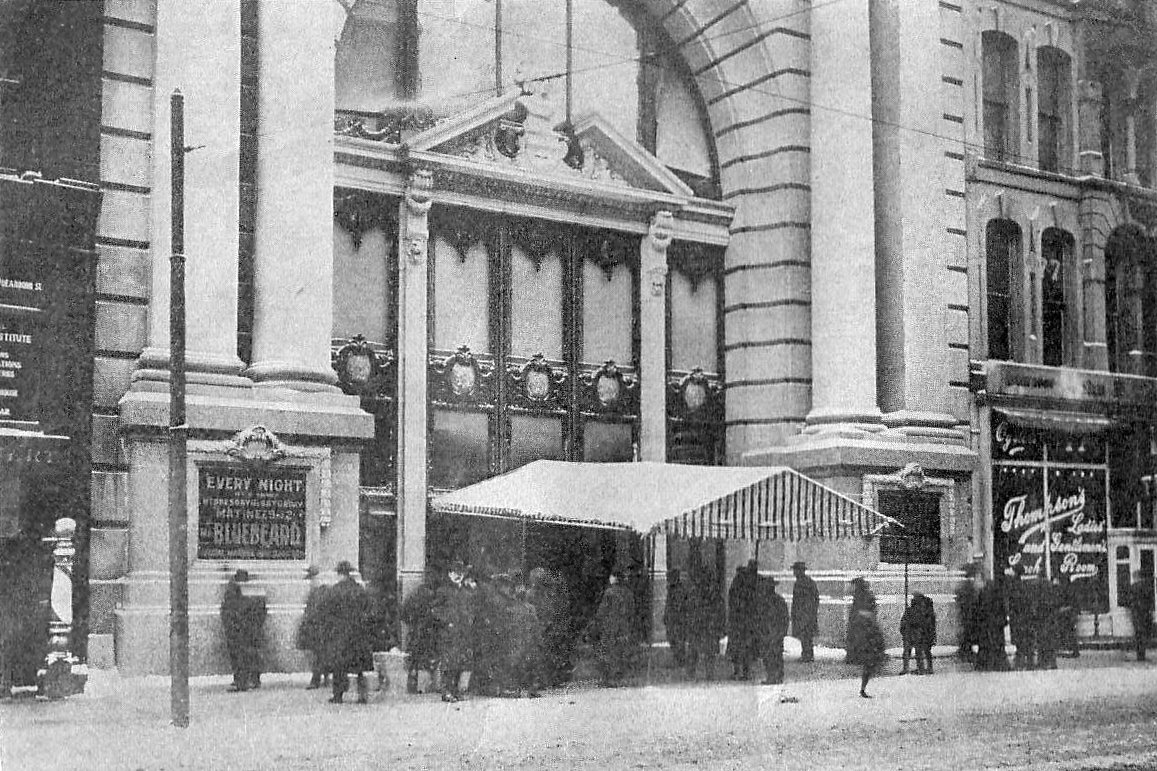
The Iroquois Theatre was supposed to be the safest playhouse in America. It opened on November 23, 1903, on Randolph Street in downtown Chicago: a palace of marble, mahogany, and plate glass, designed by the young architect Benjamin Marshall and run by theatre magnates Will J. Davis and Harry Powers. Its promoters printed the boast right on the playbills. Absolutely fireproof.
The boast covered a building that was, behind the marble, dangerously unfinished. There were no sprinklers over the stage. There was no fire alarm box and no telephone. There were no water connections for hoses. The ventilation flues above the stage had been boarded shut. The fire escapes were incomplete, and many of the exit doors were hidden behind decorative draperies. The house had been rushed open for the profitable holiday season, and the safety work had simply not caught up.
People noticed. A Chicago fire captain toured the building days before it opened and listed the missing alarms, sprinklers, and water connections. An editor of Fireproof Magazine flagged the missing draft shaft over the stage during construction. Nothing was done. The theatre's entire fire defense was one house fireman and a few tubes of Kilfyre, a dry chemical powder meant for chimney fires.
The Holiday Matinee
December 30 fell in the middle of Christmas school break, and the Wednesday matinee of Mr. Blue Beard was sold far past its limits. The house had 1,602 seats. An estimated 2,100 or more people were inside, with hundreds of standing-room tickets sold and patrons packed into the aisles. Overwhelmingly they were women, children, and teachers on holiday outings: mothers with two or three children apiece, grandparents treating grandchildren, whole school groups.
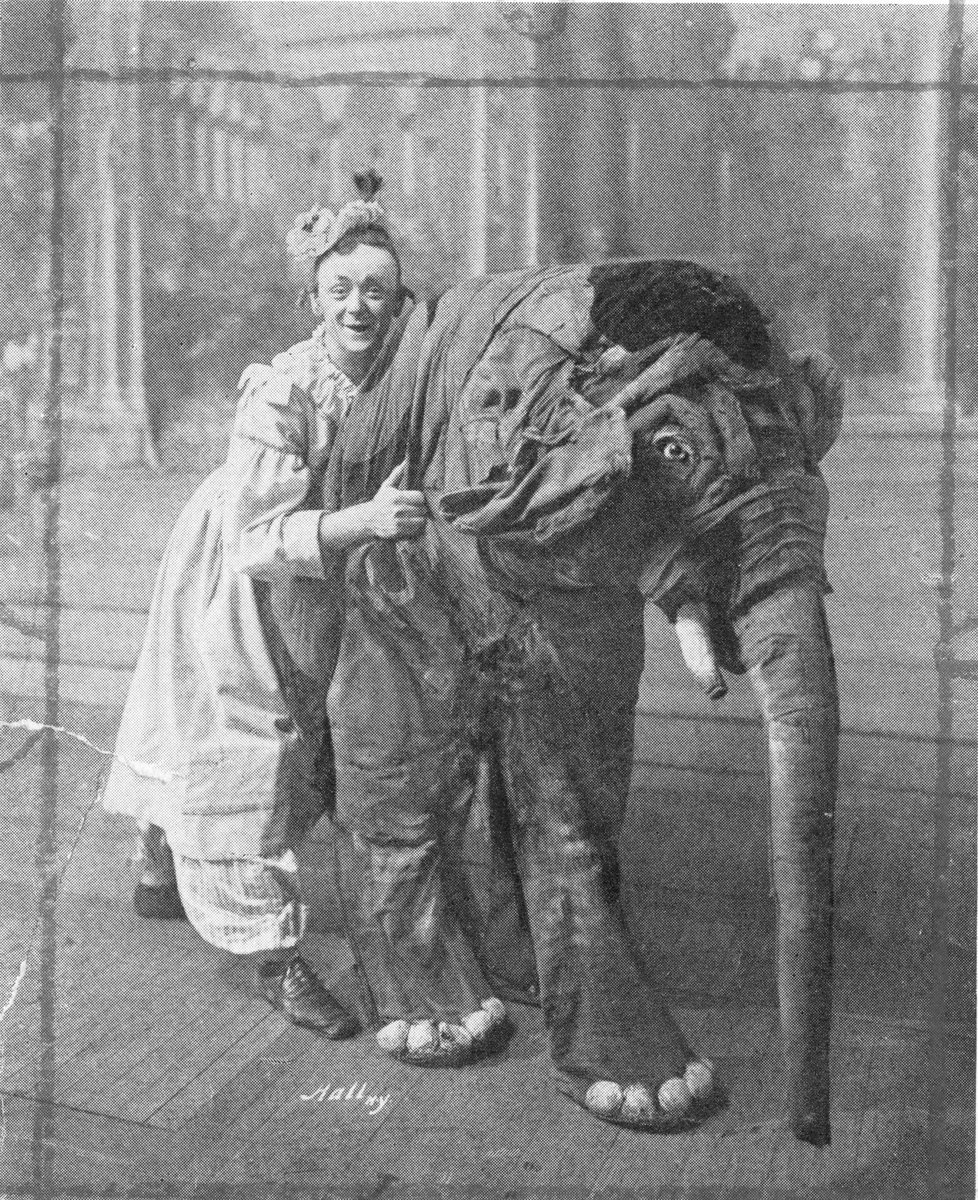
Mr. Blue Beard was a lavish musical spectacle imported from London's Drury Lane, with a cast and crew of roughly 300. Its star was Eddie Foy, one of the most beloved comedians in America, playing the dame role of Sister Anne in skirts and clown makeup. Foy had brought his six-year-old son Bryan to watch from backstage that afternoon.
"It struck me as I looked out over the crowd during the first act that I had never before seen so many women and children in the audience. Even the gallery was full of mothers and children."
— Eddie Foy, Clowning Through Life (1928)
Fifteen Minutes
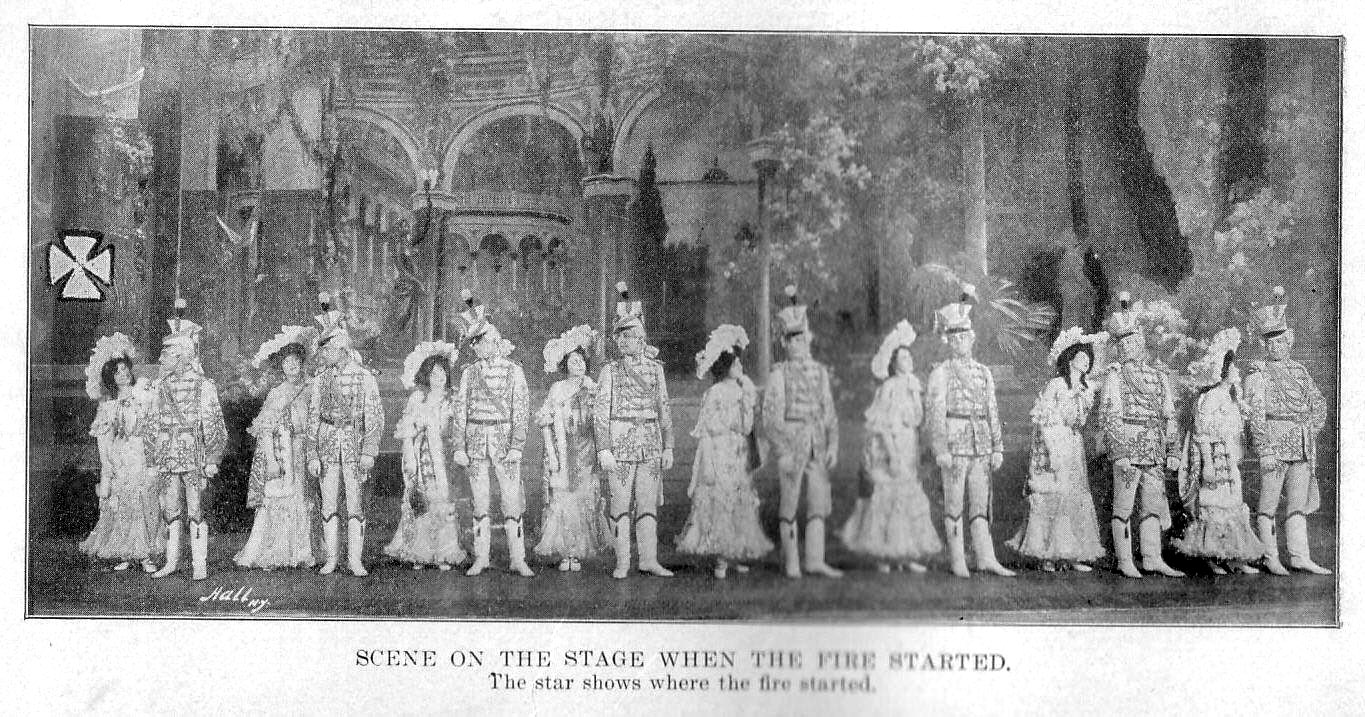
The fire began with a spark. Shortly after 3:15 p.m., early in the second act, sixteen performers were singing a soft double octet called "In the Pale Moonlight." The house lights were down. High above the stage, an arc spotlight sputtered, and a spark caught a muslin drape hanging a dozen feet up. The operator, William McMullen, had warned that the lamp sat too close to the fabric. He swatted at the flame with his hands. It climbed out of reach in seconds.
Everything above the stage was fuel. The fly gallery held roughly 280 painted canvas backdrops, oil-based scenery stacked into the rafters of a building with its vents boarded shut. A stagehand beat at the flames. The house fireman threw Kilfyre powder at a fire burning fifteen feet over his head. There was no alarm to pull, no hose to aim, no sprinkler to open. The first alarm reached the fire department at about 3:33 p.m., pulled from a box down the street. By then the worst of it was already over.
The theatre did have one purpose-built defense: an asbestos safety curtain designed to drop and seal the stage off from the auditorium. As the audience began to stir, the order was given to lower it. It came down partway and snagged on a light reflector projecting under the proscenium arch, jamming with a gap beneath it. A chemist who analyzed the curtain afterward found it was largely wood pulp, a cheap blend that, in his words, "may get inside city ordinances, but is of no value in a fire." The last line of defense was a prop.
Foy ran out in half costume, planted himself at the footlights, and begged the audience to stay calm and move slowly. He ordered the orchestra to keep playing, and a handful of musicians did, until burning scenery began dropping around them. Then performers fleeing out the rear of the building threw open the big scenery doors to the alley, and the winter wind did the rest. Air rushed under the jammed curtain and drove a fireball of flame and superheated gas out over the auditorium, into the faces of the balcony and gallery crowds. Most of the people who died were dead within minutes of that single gust.
The Doors
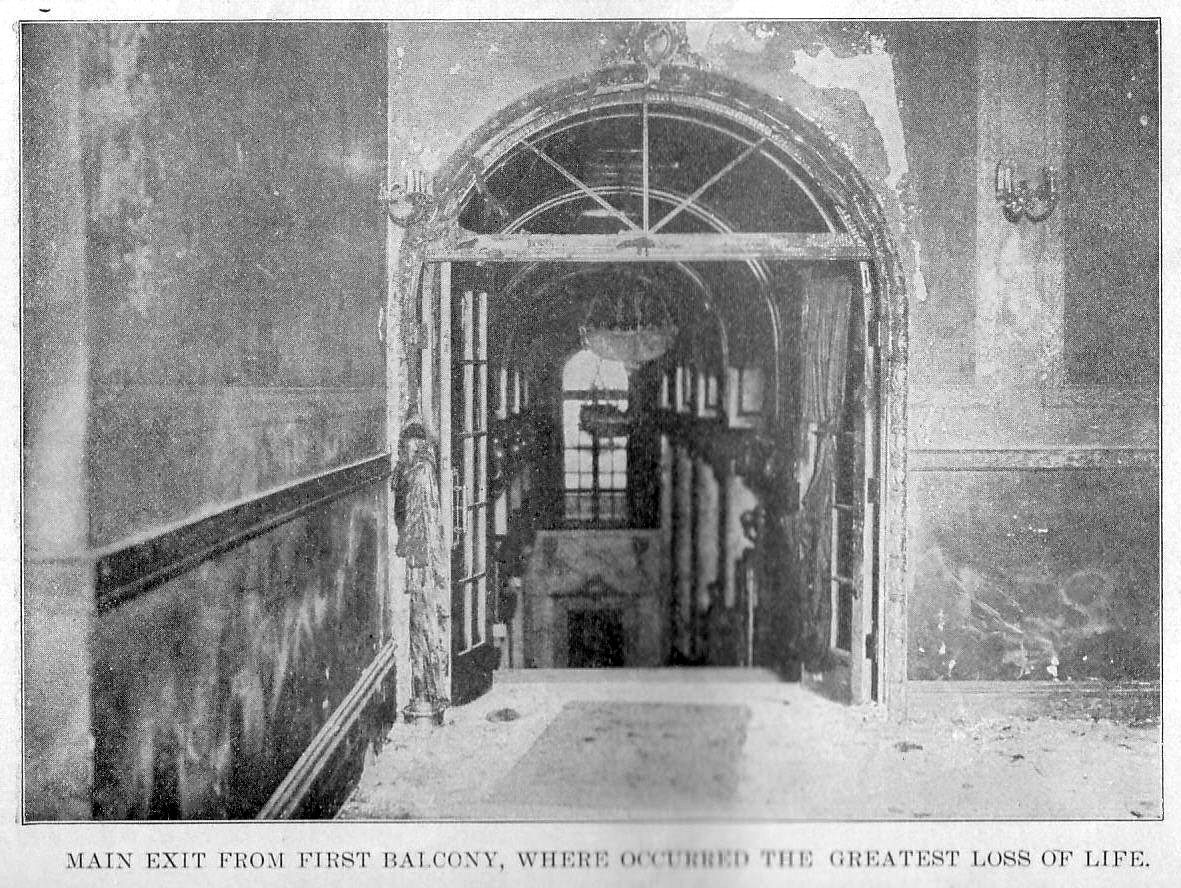
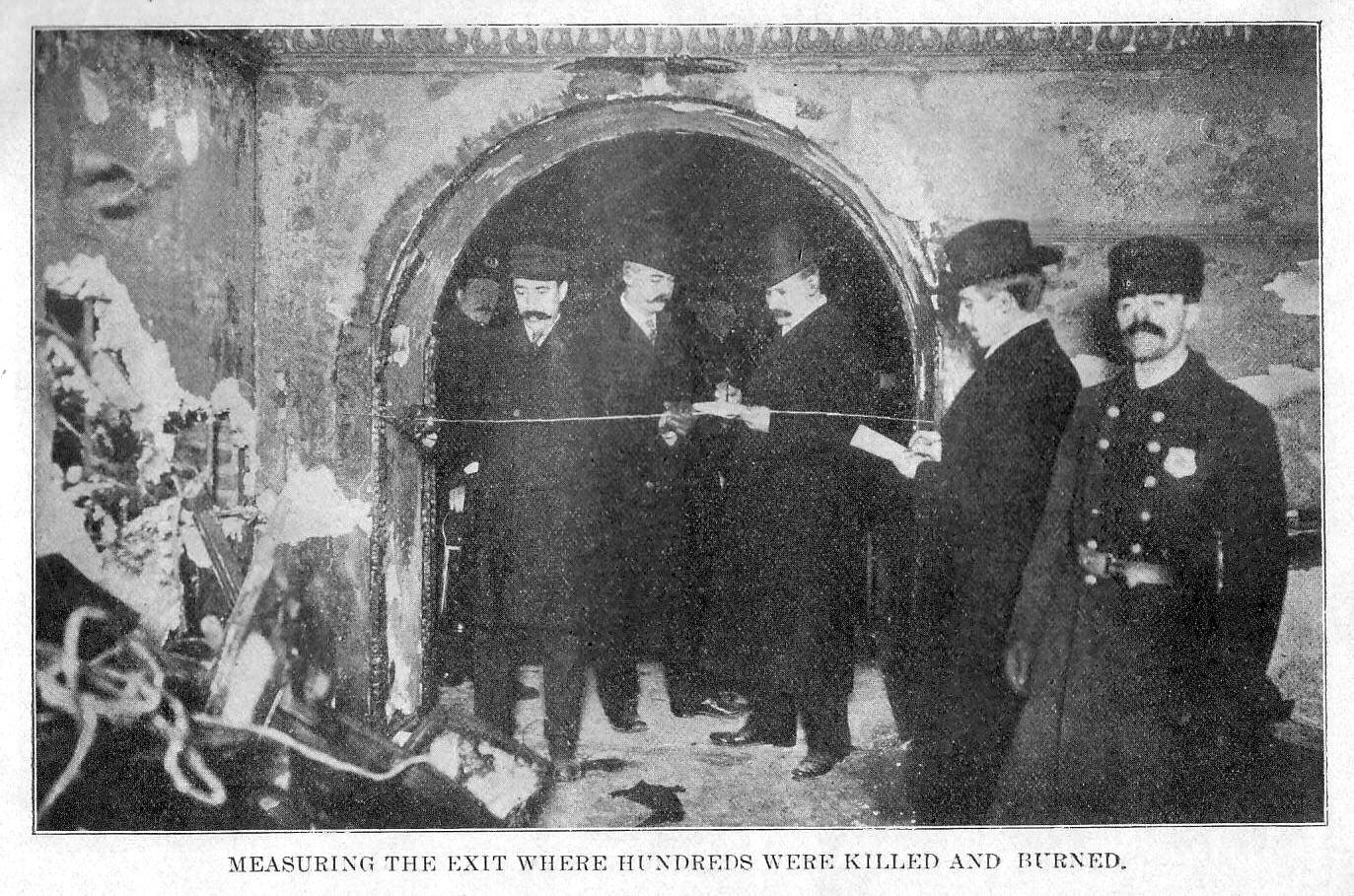
Here is the fact that changed the world's building codes: the Iroquois had about thirty exits, and they barely worked. Many were concealed behind draperies so they would not spoil the decor. Some were locked outright. The ones the crowd could find were fitted with bascule locks, a European-style lever latch that almost no American had ever operated, and in the dark, in the crush, panicked hands could not solve them. One man, a former ballplayer named Frank Houseman, got a door open only because his icebox at home used the same latch.
Worse, the doors opened inward. As hundreds of bodies pressed toward each exit, the crowd's own weight sealed it shut. And on the stairways from the balcony and gallery, iron accordion gates had been locked across the landings during the performance, a routine measure to keep cheap-ticket holders from slipping down into better seats. The people in the gallery, highest in the house, where the heat and smoke went first, ran down the stairs and met locked gates.
When rescuers got inside, they found the dead stacked along the stairways and against the exits. Foy wrote that at the turns of the stairs the bodies were "piled seven or eight feet deep." Firefighters, stationed only a block away, had the flames themselves under control quickly. It made no difference.
Death Alley
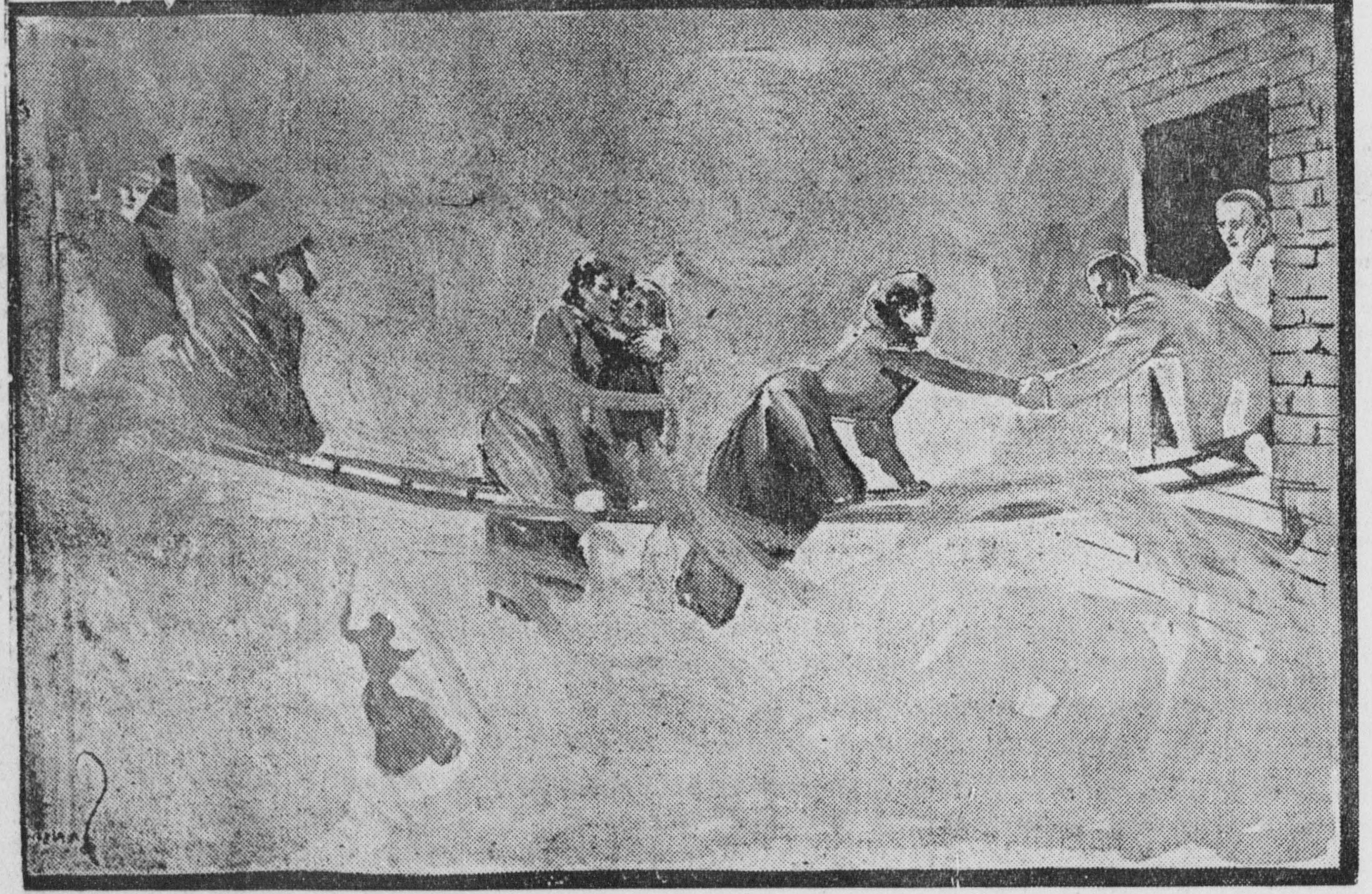
Behind the theatre ran a narrow service lane called Couch Place. Gallery patrons who escaped the gates reached fire escape doors above it and found the iron platforms unfinished, one of them missing its ladder, all of them glazed with December ice. Flames were already venting from the openings below. People jumped. People fell. Those who landed first were struck by those who followed.
Across the alley stood a building used by Northwestern University. Painters and students inside shoved ladders and wooden planks across the gap to the fire escape landings, and a number of people crawled over those makeshift bridges to safety. The first attempts fell. Roughly 125 people died at or below the fire escapes. Newspapers called Couch Place "the alley of death," and Chicagoans call it Death Alley to this day.
Among the dead was one performer: Nellie Reed, the British star of the show's flying ballet, who was rigged to a trolley wire high above the stage awaiting her entrance when the fire cut her off. Of the company of roughly 300, only five died. Of the audience, nearly one in four.
| Safeguard | Condition on December 30, 1903 |
|---|---|
| Fire alarm | None in the building; first alarm pulled from a street box at ~3:33 p.m. |
| Sprinklers | None |
| Fire curtain | Jammed partway down; analysis found it largely wood pulp, not asbestos |
| Exits | About 30, most locked, hidden behind draperies, or fitted with unfamiliar latches |
| Stairway gates | Iron accordion gates locked across gallery stairs during the show |
| Fire escapes | Unfinished and iced over Couch Place alley |
| Firefighting gear | Six tubes of Kilfyre dry powder |
The Trial That Punished No One
The death toll settled at 602, and some counts run higher. About 575 people died that afternoon; dozens more died of injuries in the days that followed, and roughly a third of the dead were children. It was, and remains, the deadliest single-building fire in American history. It killed roughly twice as many people as the Great Chicago Fire of 1871, which burned for two days and leveled the city.
The reckoning looked swift at first. Chicago closed every theatre in the city for weeks of inspections. Theatre manager Will J. Davis was arrested and charged with manslaughter, along with the building commissioner and members of the theatre staff. Even Mayor Carter Harrison Jr. was arrested after the inquiry found the city had never enforced its own codes.
Then the machinery of the law ground the whole thing to dust. The mayor was released and absolved. Indictments were challenged, venues changed, cases delayed year after year by the theatre syndicate's lawyers. When Davis finally stood trial in 1907, in Danville, Illinois, the judge directed an acquittal on a technicality: the city ordinance he was accused of violating was ruled invalid. Nobody, not an owner, not an official, not a builder, was ever convicted of anything. Nearly all of the roughly 275 civil suits brought by the families failed.
Six hundred and two people were dead, and in the eyes of the law, no one had done it.
The Reforms That Outlived the Verdict
The courts delivered nothing, so the building codes delivered instead. Within months, Chicago and cities across America and Europe rewrote their theatre laws, and the fingerprints of the Iroquois are now on virtually every public building on Earth.
Exit doors must open outward, in the direction of escape, so a crowd's own pressure pushes them open instead of sealing them shut. Exits must be clearly marked with illuminated signs that stay lit when the power fails, because the Iroquois audience died searching for doors hidden behind velvet. Exits must remain unlocked whenever the public is inside. Occupancy limits, unobstructed aisles, flame-treated scenery, real fire curtains, and mandatory alarms and drills all trace to the same afternoon.
And then there is the bar you push to leave a theatre, a school, a stadium. In Indianapolis, a hardware executive named Carl Prinzler had planned, by long-standing company account, to attend the Iroquois that very afternoon; only business kept him away. Haunted by the doors that would not open, he worked with engineer Henry DuPont on a latch that needed no knowledge and no key: a horizontal bar that unlocks the door when a body presses against it. Patented in 1908 and sold as the Von Duprin device, from the names Vonnegut, DuPont, and Prinzler, it is the panic bar, now required by code in crowded buildings across the world. Every time you push one, you are touching the legacy of the Iroquois Theatre.
What Remains
The theatre itself outlived its dead by only two decades. Repaired and reopened within a year, renamed the Colonial Theatre in 1905, it was demolished in 1925. The Oriental Theatre rose on the site in 1926; today it is the James M. Nederlander Theatre, and audiences fill a house standing on the same ground. Couch Place still runs behind it, a shadowed service alley that ghost-tour guides still call Death Alley.
The memorials are quiet ones. A Lorado Taft bronze honoring the victims stands in Chicago's City Hall. A monument at Montrose Cemetery marks the unidentified dead. For decades the Iroquois Memorial Hospital carried the name.
But the real memorial is not in Chicago. It is the lit exit sign over the door of every theatre you have ever sat in, the outward swing of the door beneath it, and the bar that opens at a touch. The Iroquois Theatre promised it could never burn, and the promise failed in fifteen minutes. What was learned from that failure has been saving lives, silently and daily, for more than a century.