On the morning of June 7, 1816, a physician in New England recorded the temperature and wrote in his diary: "exceedingly cold. Ground frozen hard, and squalls of snow through the day. Icicles 12 inches long in the shade of noon day."
It was June. There were icicles a foot long at midday.
The next day, in Cabot, Vermont, eighteen inches of snow fell. In Quebec, fields that had been green the week before were buried. Corn that farmers had coaxed through the cold spring blackened overnight. In some towns, people who had already sheared their sheep tried to tie the fleeces back onto the animals. Many of the sheep froze to death anyway.
New Englanders had a name for the year: "Eighteen Hundred and Froze to Death." They also called it the Poverty Year. Those names were not metaphors.
The Mountain That Changed Everything
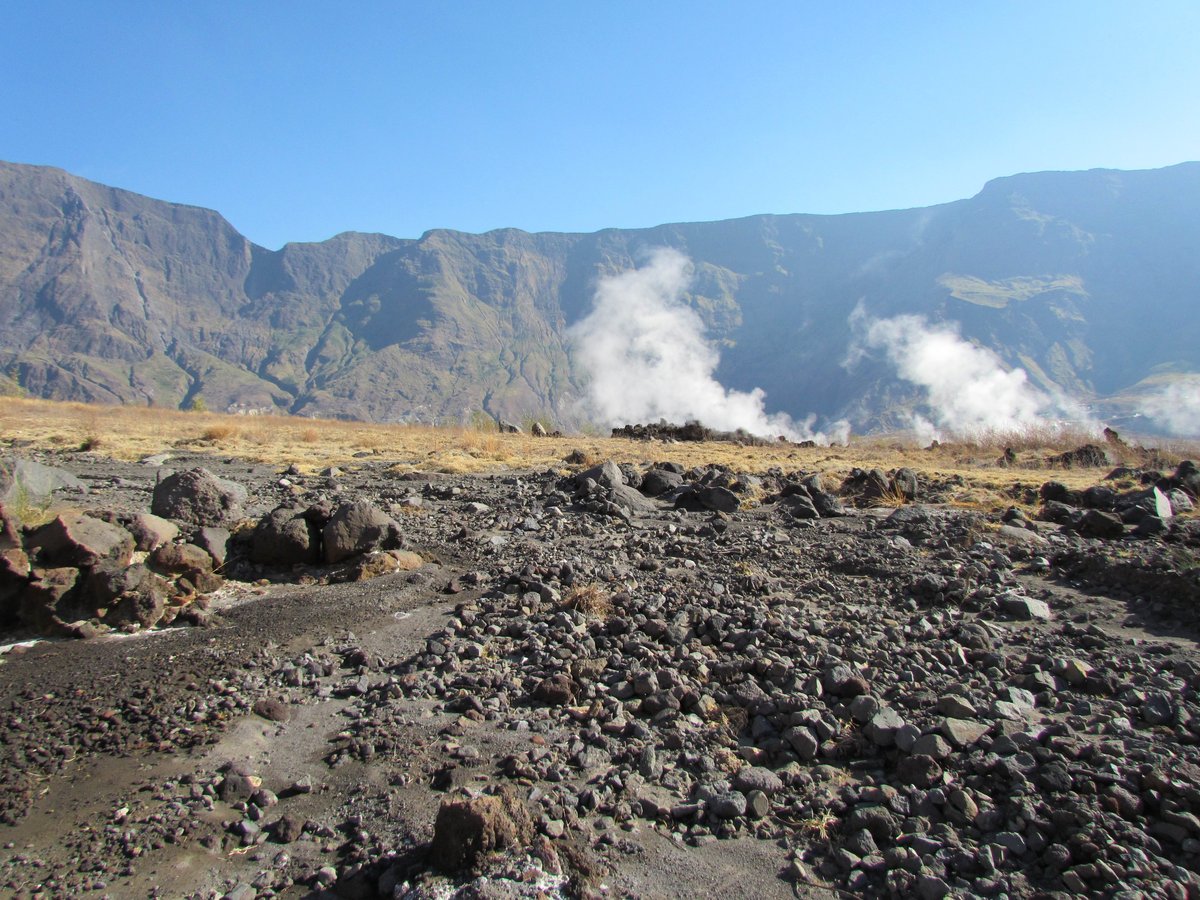
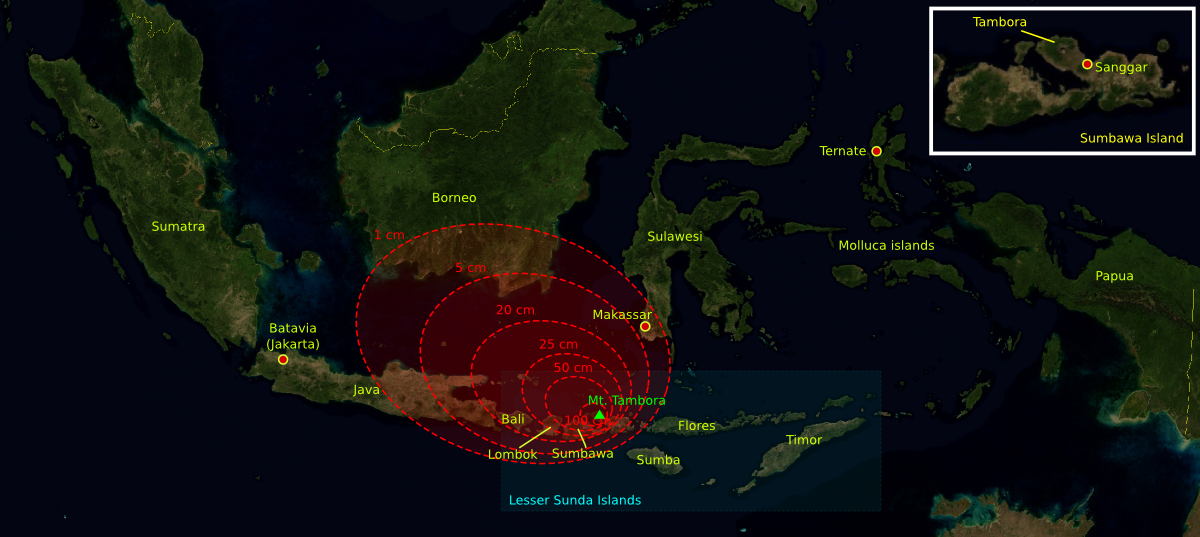
The cause was a volcano named Tambora, on the island of Sumbawa in the Dutch East Indies, now Indonesia. It erupted on the night of April 10, 1815, and the sound was heard more than 2,600 kilometres away on Sumatra. The explosion registered as artillery fire to people who had no idea what it was.
No eruption in recorded human history has been larger. Tambora ejected roughly 160 cubic kilometres of material, more than twelve times the volume expelled by Mount Pinatubo in 1991. The mountain itself lost more than 1,400 metres of height in a single night, leaving a caldera six kilometres wide and 1,100 metres deep.
At least 71,000 people died in the eruption and its immediate aftermath. One indigenous group on Sumbawa, the Tamboran people, was entirely wiped out. Only 48 words of their language survived, recorded by chance in a Dutch colonial document. The people who spoke them were gone.
But the eruption's longest reach came from what it put into the sky.
The Invisible Veil
Tambora released an estimated 10 to 120 million tons of sulfur dioxide into the stratosphere. Sulfur dioxide, combined with water vapor at high altitude, forms sulfuric acid aerosols. Unlike volcanic ash, which settles within weeks, stratospheric aerosols persist for one to three years. They spread around the globe on high-altitude winds, forming an invisible sunscreen that reflects incoming solar radiation before it can warm the surface below.
This is what a volcanic winter is. Not darkness, not ash falling on crops. A veil so thin as to be imperceptible to the naked eye, distributed evenly across the stratosphere, quietly redirecting a fraction of the sun's energy back into space for the better part of two years.
A fraction of a degree of global cooling sounds like nothing. In practice, it was everything. Average global temperatures dropped 0.4 to 0.7 degrees Celsius in 1816. In some parts of the Northern Hemisphere, local summer temperatures fell nearly three degrees Fahrenheit below normal. That difference, applied to a single growing season, was enough to collapse agriculture across three continents.
Tambora at a Glance
Eruption date: April 10–11, 1815
Location: Sumbawa island, Dutch East Indies (modern Indonesia)
VEI rating: 7 — largest in recorded human history
Material ejected: approximately 160 km³
SO₂ released: 10–120 million tons into the stratosphere
Immediate deaths: at least 71,000
Global temperature drop: 0.4–0.7°C average; up to 1.7°C locally in summer 1816
The American Summer That Wasn't
In the northeastern United States, the effects arrived in April 1816 as a persistent, inexplicable cold. Fruit trees that had bloomed in the mild spring had their buds killed by May frosts. Ice an inch thick formed on ponds in New England in mid-May, a month and a half past when that should have been possible.
Then came June.
The June snowfall was not a single storm. It came in waves, interspersed with brief warmings that gave false hope and then collapsed again. Chauncey Jerome, a clockmaker in Plymouth, Connecticut, recalled his wife finding clothes spread on the ground overnight "frozen stiff as in winter." He wore heavy woolen clothes and an overcoat to work throughout what should have been midsummer.
July and August brought no relief. A newspaper in Norfolk, Virginia wrote in mid-July: "It is now the middle of July, and we have not yet had what could properly be called summer." Temperatures swung wildly, sometimes rising to near-normal in the afternoon before dropping thirty degrees Fahrenheit by morning. Corn froze as far north as it had ever been planted.
By September, the accounting was clear. Three-quarters of the corn crop across the Northeast was lost. Oat prices rose from 12 cents per bushel to 92 cents, a 667 percent increase. Hay cost six times its normal price. Farmers slaughtered livestock they could not afford to feed through a second winter. Some who could not afford to do that simply watched the animals starve.
Thomas Jefferson's Ruin
Thomas Jefferson kept meticulous weather records at Monticello. In May 1816, he wrote of repeated frosts that had "killed the early fruits." By summer's end, he recorded 1816 as "the most extraordinary year of drought and cold ever known in the history of America."
His corn harvest came in at less than a third of ordinary yield. Tobacco was worse. Jefferson was already heavily in debt, and the failed harvest of 1816 was one of the blows that ensured he would die bankrupt. The farmer at Monticello and the volcano in Indonesia never knew anything of each other. But they were connected.
Across New England, the demographic consequences were immediate. Vermont alone lost 10,000 to 15,000 residents in 1816 and 1817, erasing seven years of population growth in a single exodus. People called it "Ohio fever": the desperate conviction that things had to be better somewhere west. The migration helped accelerate settlement of Indiana and Illinois. One family that relocated was named Smith. Their son Joseph would later found the Church of Jesus Christ of Latter-day Saints in upstate New York.
Europe in Famine
The historian John D. Post called the 1816 crisis "the last great subsistence crisis in the Western world." That phrase understates what actually happened.
In Switzerland, southern Germany, and France, grain prices nearly doubled. Bread riots erupted in London, Paris, and Zurich in the most serious civil unrest Europe had seen since the French Revolution. In Germany and Switzerland, there are accounts of people attempting to make bread from straw and tree bark, eating moss, boiling grass. Red and brown snow fell in northern Italy and Hungary, colored by volcanic ash still circulating in the upper atmosphere.
Ireland saw famine deaths that may have reached 80,000. A typhus epidemic that swept Ireland, Italy, Switzerland, and Scotland between 1816 and 1819 killed an estimated 65,000 to 100,000 more. It remains the worst Irish famine until the Great Famine of the 1840s.
In Württemberg, Germany, death rates exceeded birth rates for the first time in recorded memory. King William I responded by implementing agricultural reforms and drafting a new constitution. The famine was not the only cause. But it was the accelerant.
The Night Frankenstein Was Born
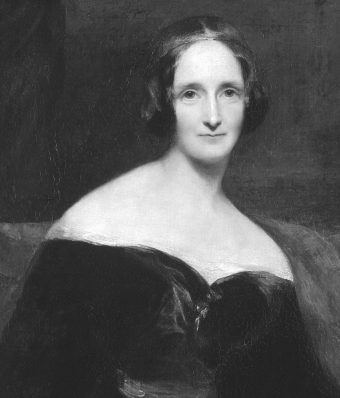
In June 1816, Lord Byron rented the Villa Diodati on the shore of Lake Geneva. His companions were his physician Dr. John Polidori, Percy Bysshe Shelley, Percy's eighteen-year-old companion Mary Godwin, and her stepsister Claire Clairmont.
The summer was, in Mary's words, one of "incessant rain." The group was largely confined indoors by the cold and the persistent gray. One evening they read aloud from a French anthology of German ghost stories. Byron proposed a contest: each of them would write one.
Mary struggled. Each morning, Percy asked if she had thought of a story. Each morning the answer was no. Then one night, after a conversation about galvanism and the possibility of reanimating dead tissue, she experienced what she later described as a waking dream: "I saw the pale student of unhallowed arts kneeling beside the thing he had put together. I saw the hideous phantasm of a man stretched out, and then, on the working of some powerful engine, show signs of life, and stir with an uneasy, half vital motion."
She had her story. It was published in 1818. In the 1831 preface she wrote: "And now, once again, I bid my hideous progeny go forth and prosper."
Byron's Darkness
Byron wrote his contribution that same summer. "Darkness" was published in July 1816 and began with the line: "I had a dream, which was not all a dream." He later explained that he wrote it at Geneva "when there was a celebrated dark day, on which the fowls went to roost at noon, and the candles were lighted as at midnight."
The poem depicts the sun extinguishing and civilization collapsing with it. It is widely considered the first major "Last Man" narrative in English literature: a story told from the edge of total extinction. The post-apocalyptic genre has a direct line back to one cold summer on Lake Geneva.
John Polidori contributed the third creation from that summer. His story, written from notes taken at the Villa, was published in 1819 as "The Vampyre." It was the first work to transform vampires from folk-horror monsters into aristocratic, seductive figures operating in high society. Bram Stoker's Dracula followed its template seven decades later.
One eruption. One summer. Frankenstein, the modern vampire, and the first post-apocalyptic story in the English language. The relationship is not coincidental. It is causal.
What the Ice Remembers
For most of the nineteenth century, no one understood what had happened. There was no global communications network in 1815. The Tambora eruption was not known in Europe or North America until months after the fact. Contemporaries attributed the cold summer to sunspot activity, to local meteorological anomalies, to divine judgment.
The Tambora-climate connection was not established until the twentieth century. The definitive proof came from ice cores drilled in Greenland and Antarctica. In the ice layer that formed in 1816, approximately 110 metres below the surface in Greenland cores, scientists found a sharply elevated acidic layer: the sulfate deposit from Tambora. The signal is one of the strongest and most easily identifiable volcanic markers in the entire polar ice record.
The ice cores also revealed something more unsettling. A 2009 study found that an unidentified eruption in 1809, from a volcano that has never been conclusively located, had already deposited stratospheric sulfate across both polar regions. The mystery volcano had primed the atmosphere before Tambora fired. Their combined effect explains why the entire decade of 1810 to 1819 was anomalously cold, not just the single year of 1816.
There was one more unexpected consequence. With horses dying from the failed grain harvests and oat prices having risen nearly sevenfold, a German engineer named Karl Drais began designing a human-powered two-wheeled vehicle that required no feed. On June 12, 1817, he rode it from Mannheim to a relay station seven kilometres away in just over an hour. He called it the Laufmaschine. The modern world calls it the bicycle. It exists because a mountain in Indonesia destroyed the horse economy of central Europe.
The 1815 eruption killed at least 71,000 people directly. The climate crisis it triggered killed hundreds of thousands more through famine, disease, and cold. The ones who survived made decisions, wrote books, moved west, invented machines, and left records that outlasted the aerosols by centuries. The volcano is gone from the stratosphere. What it built is still here.
Works Cited
- Year Without a Summer — Wikipedia
- Mount Tambora — Wikipedia
- Villa Diodati — Wikipedia
- Darkness (poem) — Wikipedia
- The Vampyre — Wikipedia
- Oppenheimer, C. (2003). Climatic, environmental and human consequences of the largest known historic eruption: Tambora volcano (Indonesia) 1815. Progress in Physical Geography, 27(2), 230–259. Link
- Gao, C. et al. (2009). Cold decade (AD 1810–1819) caused by Tambora (1815) and another (1809) stratospheric volcanic eruption. Geophysical Research Letters, 36(22). Link
- Eighteen-Hundred-and-Froze-to-Death: 1816 — Connecticut History
- 1816: Year Without a Summer — New England Historical Society
- Post, J.D. (1977). The Last Great Subsistence Crisis in the Western World. Johns Hopkins University Press.
- Shelley, M. (1831). Preface to the third edition of Frankenstein; or, The Modern Prometheus. Henry Colburn and Richard Bentley.
- Volcanic Eruption That Changed the World — National Geographic