Yuri Yudin turned back on January 28. He had developed sciatic nerve pain, and the route ahead was too demanding to push through. He said goodbye to his eight friends at a mining settlement in the northern Urals and went home. He spent the rest of his life, until his death in 2013, wondering what he had walked away from.
"If I had a chance to ask God just one question," he said, "it would be: what really happened to my friends that night?"
Nobody has answered it yet.
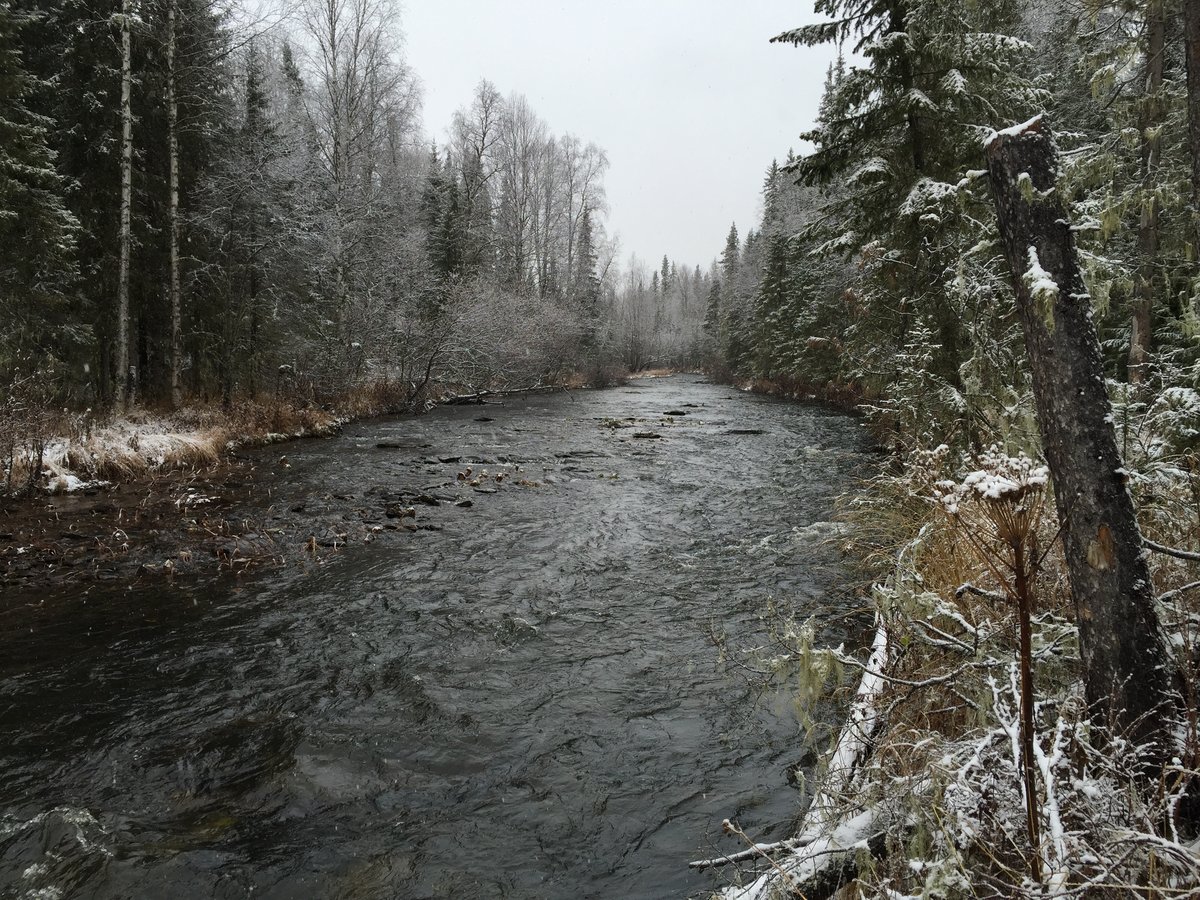
The Group
They were nine students and graduates of the Ural Polytechnic Institute in Sverdlovsk, the city now called Yekaterinburg. All were certified mountaineers. Igor Dyatlov, 23, was the group leader: a radio engineering student who had organised the trip and mapped the route. The others ranged from 20 to 38, and all but one were roughly the same age — Semyon Zolotaryov, a 38-year-old military veteran who had joined the group at the last minute and whom Dyatlov's friends hadn't met before. Lyudmila Dubinina's diary noted at the time: "At first, no one wanted him in the group because he's a complete stranger."
They set out from Sverdlovsk on January 23, 1959, aiming for Gora Otorten, a peak in the northern Ural range. The route was Category III: the highest Soviet difficulty rating. They were due back by February 12. When they didn't return, and telegrams went unanswered, relatives and the university pushed for a search. Volunteer hiking groups and eventually military teams fanned out across the range beginning February 20.
What the Search Party Found
On February 26, searcher Mikhail Sharavin located the tent on the eastern slope of a mountain the Mansi people called Kholat Syakhl. "The tent was half torn down and covered with snow," he later recalled. "It was empty, and all the group's belongings and shoes had been left behind."
The tent had been sliced open from the inside. Multiple cuts through the fabric, made from within. All nine pairs of boots remained inside. Food was laid out as if interrupted mid-meal. The temperature outside was around minus forty degrees Celsius.
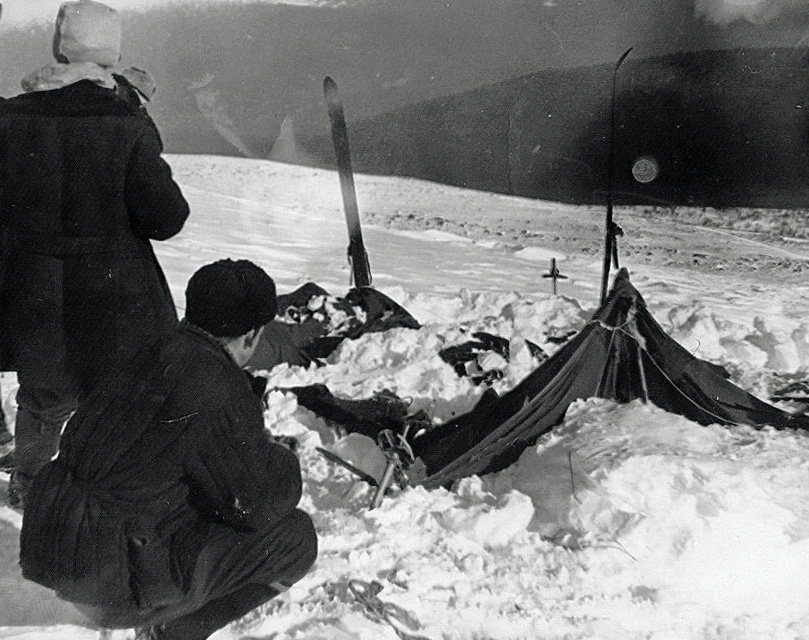
Nine sets of footprints led downslope toward the treeline, 1.5 kilometres away. They were walking pace — not running.
At a large cedar tree at the edge of the forest, searchers found the remains of a small fire. High in the branches, broken limbs showed that someone had climbed to look back toward the tent. Yuri Doroshenko and Yuri Krivonischenko were found here, in their underwear. One had singed hair. One had a burn on his leg. One had bitten his own hand, deeply, perhaps from pain or cold-induced delirium.
Between the cedar and the tent: Igor Dyatlov, Zinaida Kolmogorova, and Rustem Slobodin were found face-down in the snow, spaced progressively further from the tree. Their positions suggested they had turned back and were trying to return to the tent. Slobodin had a six-centimetre skull fracture — investigators ruled it non-fatal. He died of hypothermia.
The last four took until May to find. They were buried under four metres of snow in a ravine, seventy-five metres deeper into the forest from the cedar tree. They had been there all winter. And they were the ones who had made the most rational choices: they had scavenged clothing from the two at the cedar tree, redistributed it among themselves, and built a crude snow shelter. Their decision-making, right up to the end, was coherent.
Three of those four had injuries that stopped the investigation cold.
The Nine
Igor Dyatlov, 23 — group leader, radio engineering student
Zinaida Kolmogorova, 22 — found crawling back toward tent
Rustem Slobodin, 23 — skull fracture, ruled non-fatal; died of cold
Yuri Doroshenko, 21 — found in underwear at the cedar tree
Yuri Krivonischenko, 23 — found in underwear; worked at a nuclear facility
Lyudmila Dubinina, 20 — massive chest fractures; youngest member
Semyon Zolotaryov, 38 — WWII veteran; joined the group last-minute
Nikolai Thibeaux-Brignolles, 23 — depressed skull fracture, no scalp wound
Alexander Kolevatov, 24 — hypothermia; appears to have survived longest
The Injuries That Don't Add Up
Forensic examiner Boris Vozrozhdenny described what he found in the ravine group. Lyudmila Dubinina had six broken ribs on the left side and four on the right. Semyon Zolotaryov had five fractured ribs on the right. Nikolai Thibeaux-Brignolles had a depressed fracture in his skull, six by eight centimetres, with bone fragments pressed into his brain.
None of them had external wounds matching those injuries. No bruising. No skin damage. No marks that corresponded to what had shattered their bones.
Vozrozhdenny wrote that the force required was "comparable to that of a car crash" and that the bodies showed "no external wounds associated with the bone fractures, as if they had been subjected to a high level of pressure." He added, when asked whether the Mansi people could have attacked them: the injuries "could not have been caused by human beings, because the force of the blows had been too strong and no soft tissue had been damaged."
Something had destroyed them from the inside.
There was more. Two of Krivonischenko's garments tested mildly radioactive. He had worked at the Chelyabinsk-40 nuclear facility near the site of the 1957 Kyshtym accident — the worst nuclear disaster before Chernobyl. His contaminated work clothes almost certainly explained it. The campsite itself showed no radiation. And some who attended the funerals later described the skin on the bodies as having an orange-brown discolouration — which forensic science attributes to prolonged exposure to freeze-thaw cycles, a standard finding in bodies recovered months after death in cold environments.
The details that seem most sinister have the most ordinary explanations. The ones that don't are the chest fractures.
A Compelling Natural Force
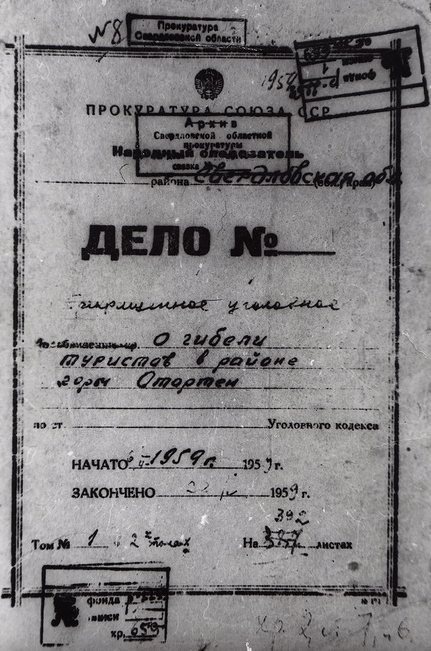
Lead investigator Lev Ivanov closed the case in May 1959. The official conclusion attributed the deaths to "a compelling natural force" — sometimes translated as "an elemental force beyond human control." The files were sealed and sent to a classified archive.
In 1990, Ivanov published an article in a regional newspaper. He wrote that he had been ordered, by regional party officials, to "classify everything, to seal everything up, to hand it over to the special unit and forget about it." He also disclosed that his team had received multiple reports of luminous spheres and orbs of light seen over the northern Urals in February and March 1959, and that he personally believed those spheres were somehow connected to the deaths.
The orbs were almost certainly Soviet ballistic missile tests launched from the Baikonur Cosmodrome. Other hiking groups in the region that February confirmed seeing the same lights. The classified files covered the weapons programme — not a murder. Ivanov's instruction to bury the investigation was about secrecy around military testing, not a cover-up of what killed the hikers. His belief that the lights caused the deaths was his own unresolved conclusion, not evidence.
Russia reopened the case in 2019 and declared it closed again in July 2020: a slab avalanche, followed by hypothermia. The families rejected the finding the same day. Their lawyer said: "The relatives will not accept this conclusion — only a technogenic theory is possible. In effect, this investigation has not produced anything."
The Best Theory We Have
In January 2021, physicists Alexander Puzrin of ETH Zürich and Johan Gaume of EPFL published a peer-reviewed study in Communications Earth and Environment. They built a computational model showing that katabatic winds depositing snow on the slope above the tent — on a cut already made when the group dug in — could produce a localised slab avalanche hours after they fell asleep. A moving slab of snow distributes force across a wide surface with minimal point impact, which explains how bones could shatter with no corresponding skin damage. The kind of force a human fist or rock could never produce.
A follow-up expedition in January 2022 filmed two actual slab avalanches at the pass, confirming that such events do occur there. Drone surveys measured the slope angle at more than 30 degrees, above the standard threshold for slab release. Professor Jim McElwaine, a geohazards expert at Durham University, called it "unlikely, but the best explanation."
What it doesn't fully account for: the four ravine victims survived long enough to travel, redistribute clothing, and build a snow shelter. If a slab crushed them catastrophically, how did three of them walk seventy-five metres and construct a den? The theory handles the injuries. The sequence of survival still has gaps.
The military weapons test theory, backed for decades by Yuri Yudin himself before his death, would explain the pressure damage and the classified response. But no evidence of a test at that location has ever emerged, no blast residue was found at the site, and the radiation on Krivonischenko's clothing has a documented source.
Every theory explains some things. None explains everything. That is where the Dyatlov Pass incident has sat for 65 years.
What the Files Actually Say
The Dyatlov Pass case has attracted its share of invented detail. A few worth correcting:
"Kholat Syakhl" does not mean "Mountain of the Dead." It means, roughly, "meager mountain" in the Mansi language — a hunter's description of land with little game. "Otorten," their destination, does not mean "Don't go there." The translation "Don't go there" originated in a mistranslation and has been repeated in documentaries, books, and podcasts ever since. The Mansi name derives from a word for goose nests.
Dubinina's missing tongue is routinely cited as the most disturbing detail of the case. It is also the most explained. She was recovered from a running stream after three months in winter conditions. The tongue is among the first soft tissues to decompose or be consumed by small scavenging animals in those circumstances. It is, sadly, unremarkable from a forensic standpoint.
The detail that remains genuinely unexplained is the one that receives the least attention: the calm exit. Nine people left a warm tent into minus-forty-degree cold without stopping to put on boots. The footprints show they walked. If something was inside the tent, you run. If something was outside, you look for your boots first. Whatever made them leave was so immediate, so overwhelming, that grabbing a boot was not possible. And then, immediately after, they were calm enough to walk in a line.
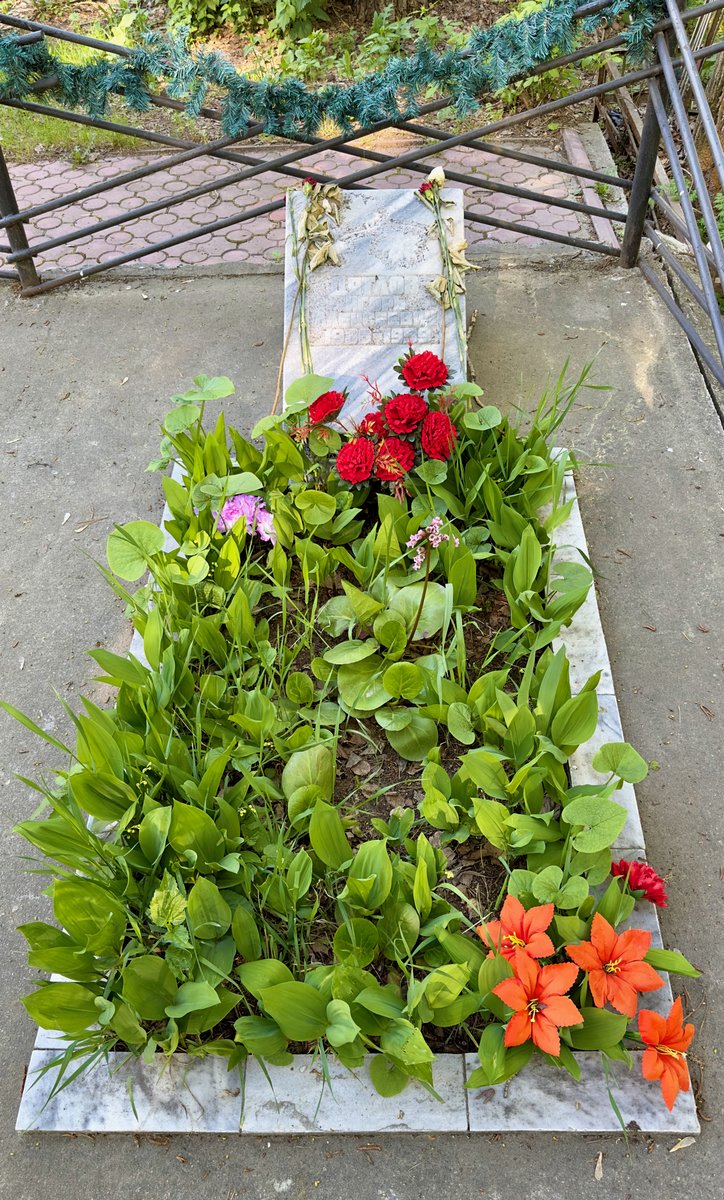
Yuri Yudin died in 2013 without his answer. The mountain hasn't offered one either.
Works Cited
- Dyatlov Pass incident — Wikipedia
- Lev Ivanov's 1990 article — dyatlovpass.com
- Puzrin and Gaume, "Catastrophic slab avalanche as the cause of the Dyatlov Pass accident" — Communications Earth and Environment, 2021
- Follow-up expeditions confirm avalanches at Dyatlov Pass — Nature, 2022
- Myths and controversies — dyatlovpass.com
- Yuri Yudin — dyatlovpass.com
- Semyon Zolotaryov — dyatlovpass.com
- Russia's official cause of death announced, 2020 — Russia Beyond
- Dyatlov Pass incident — History.com
- New expeditions to Dyatlov Pass — EPFL
- Dyatlov Pass autopsy details — ermakvagus.com